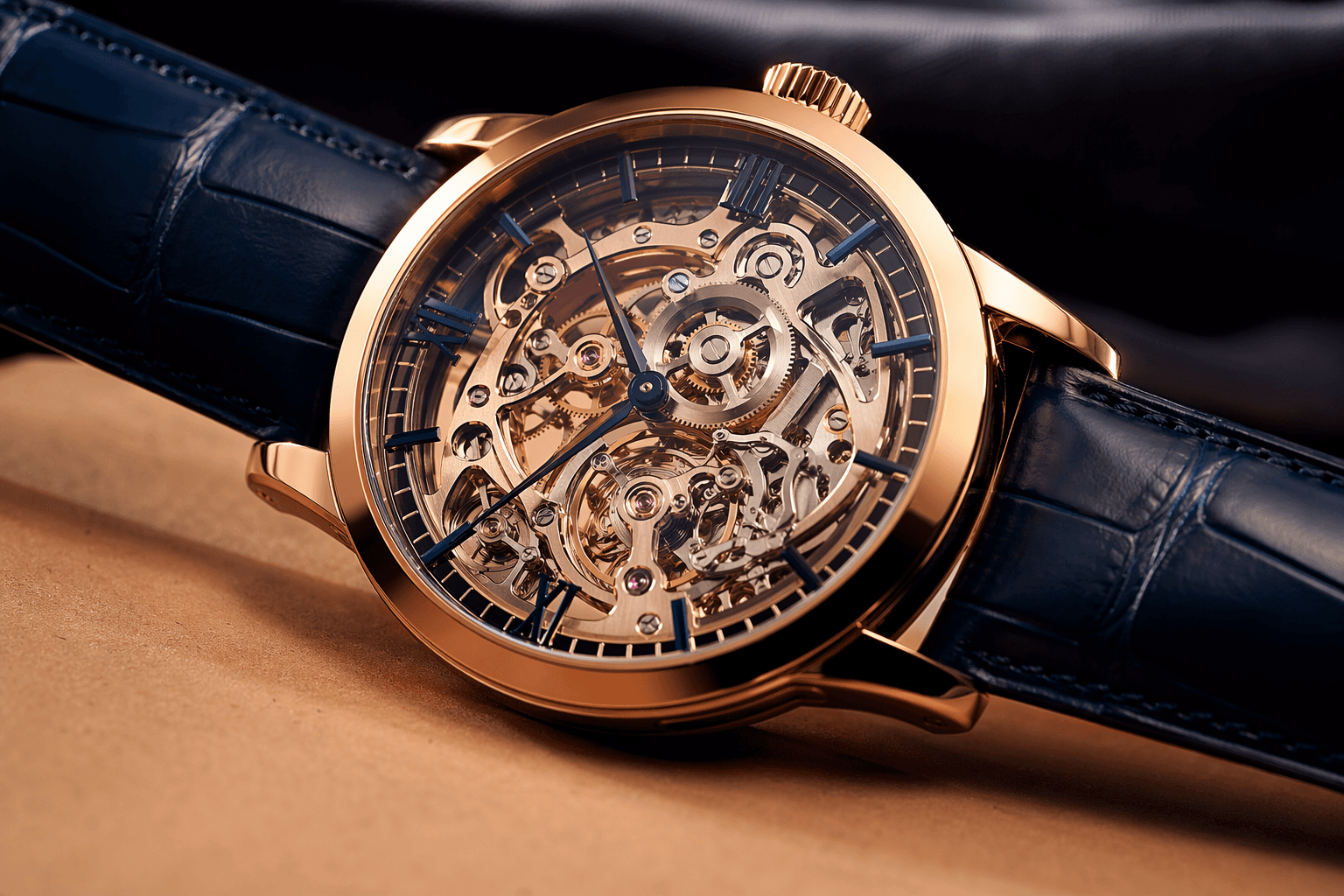
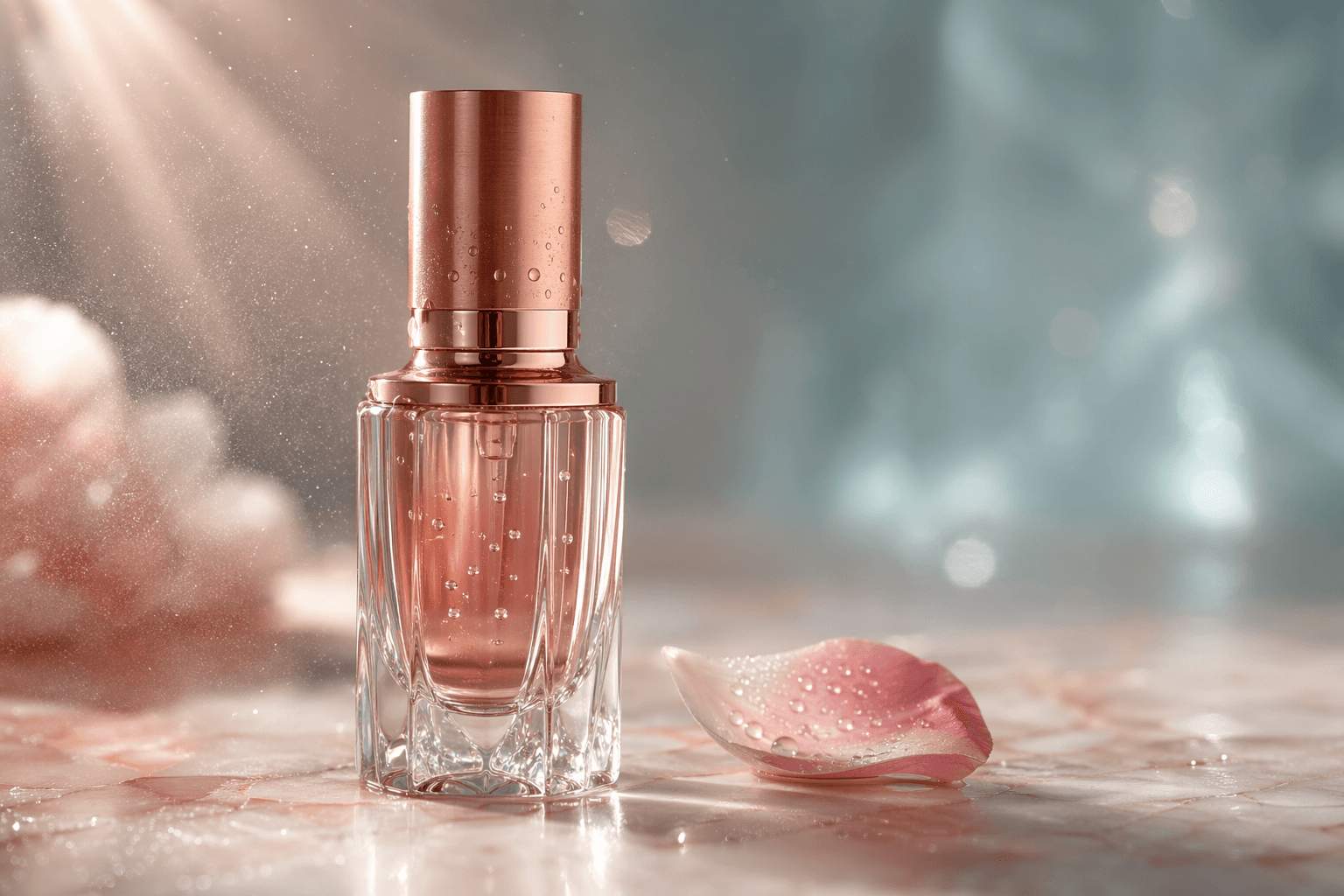
April 2026. Just a few quarters ago, generating a photorealistic ad visual with AI was a challenge. We talked about approximate reflections, plastic-like textures, and the infamous "uncanny valley" that immediately gave away a visual's artificial origin. Today, that barrier has fallen. With the rollout of gpt-image-2, OpenAI's new flagship model, we're not just seeing an improvement; we're witnessing a quantum leap. For brands, agencies, and content creators, this means one thing: the ability to produce studio-quality visuals on demand, without ever touching a camera.
This perfume bottle visual, with its complex glass reflections and liquid texture, is not a photograph. It's a 100% AI-generated image created with GPT-Image 2 through Market IA, perfectly illustrating the level of detail now achievable.
What's Really New with GPT-Image 2?
The evolution from the previous generation isn't just about resolution. It's a fundamental overhaul of how the model understands the physics of light, materials, and text. Where older models produced images that were "pretty but fake," gpt-image-2 generates scenes that are credible down to the last pixel.
The major advancements are built on five pillars:
- Material Rendering: Glass finally has the right refraction. Brushed metal captures light directionally. Human skin displays realistic pores and micro-imperfections. Textiles have a palpable texture, from the grain of linen to the softness of velvet.
- Photometric Coherence: Cast shadows are soft and physically correct. Reflections on a curved surface follow its shape. Light from a window diffuses believably into a room. No more inconsistent lighting that breaks the immersion.
- Crisp, Integrated Text: This is the most anticipated revolution. Text generated within the image is finally sharp, legible, and typographically consistent. Whether it's a brand name on a package, a slogan on a background poster, or a product tag, the result is flawless.
- Brand Kit Adherence: The model can now ingest precise constraints. You provide a logo, a color palette, and a font, and
gpt-image-2integrates them natively and contextually into the scene, just as an art director would. - Editing and Product Injection: Thanks to improved semantic segmentation, injecting an image of your product into a generated scene is a breeze. The AI automatically handles lighting, shadows, and reflections for a perfect blend.
This progress is supported by the official OpenAI announcement of the GPT-Image family, which highlights a redesigned architecture focused on physical fidelity.
| Criteria | Previous Generation | GPT-Image 2 |
|---|---|---|
| Material Rendering (glass, metal, skin) | Often flat, "plastic" appearance | Rich textures, accurate refraction & reflections |
| In-Image Text | Distorted characters, illegible gibberish | Sharp, legible, and typographically consistent |
| Brand Kit Coherence | Approximate, colors often washed out | Strict adherence to logo, colors, and fonts |
| Shadow & Reflection Handling | Inconsistencies, multiple light sources | Photometric coherence, soft and realistic shadows |
| Editing Fidelity (Product Injection) | Difficult integration, mismatched lighting | Seamless integration with automatic adjustments |
Photorealism Driving Performance: 3 Powerful Use Cases
Beyond the technical achievement, the impact on advertising strategies is immediate. Here are three areas where gpt-image-2 not only simplifies work but also unlocks new creative possibilities.
- 1. Ultra-Premium E-commerce Packshots
In luxury sectors (cosmetics, spirits, watches), the product image is king. A studio shoot is expensive and inflexible. GPT-Image 2 allows you to generate hundreds of packshot variations in conceptual settings, with perfect control over high-end materials. Imagine your perfume bottle on a block of marble, surrounded by flower petals, with realistic condensation droplets. All generated in seconds, at a fraction of the cost.
- 2. Lifestyle Scenes for Meta Ads
Social media ads demand authenticity. Models using your product in everyday situations. gpt-image-2 excels at creating these scenes. A couple drinking your coffee on a sunny balcony, an athlete applying your sunscreen before a run... The rendering of natural light, facial expressions, and product interactions reaches a level of credibility that maximizes user identification and click-through rates. This is a game-changer for creating the kind of scroll-stopping visuals detailed in our 2026 [our complete Instagram Stories & Reels guide Stories & Reels guide](https://www.market-ia.com/en/blog/instagram-stories-reels-guide-2026).
- 3. Food Photography
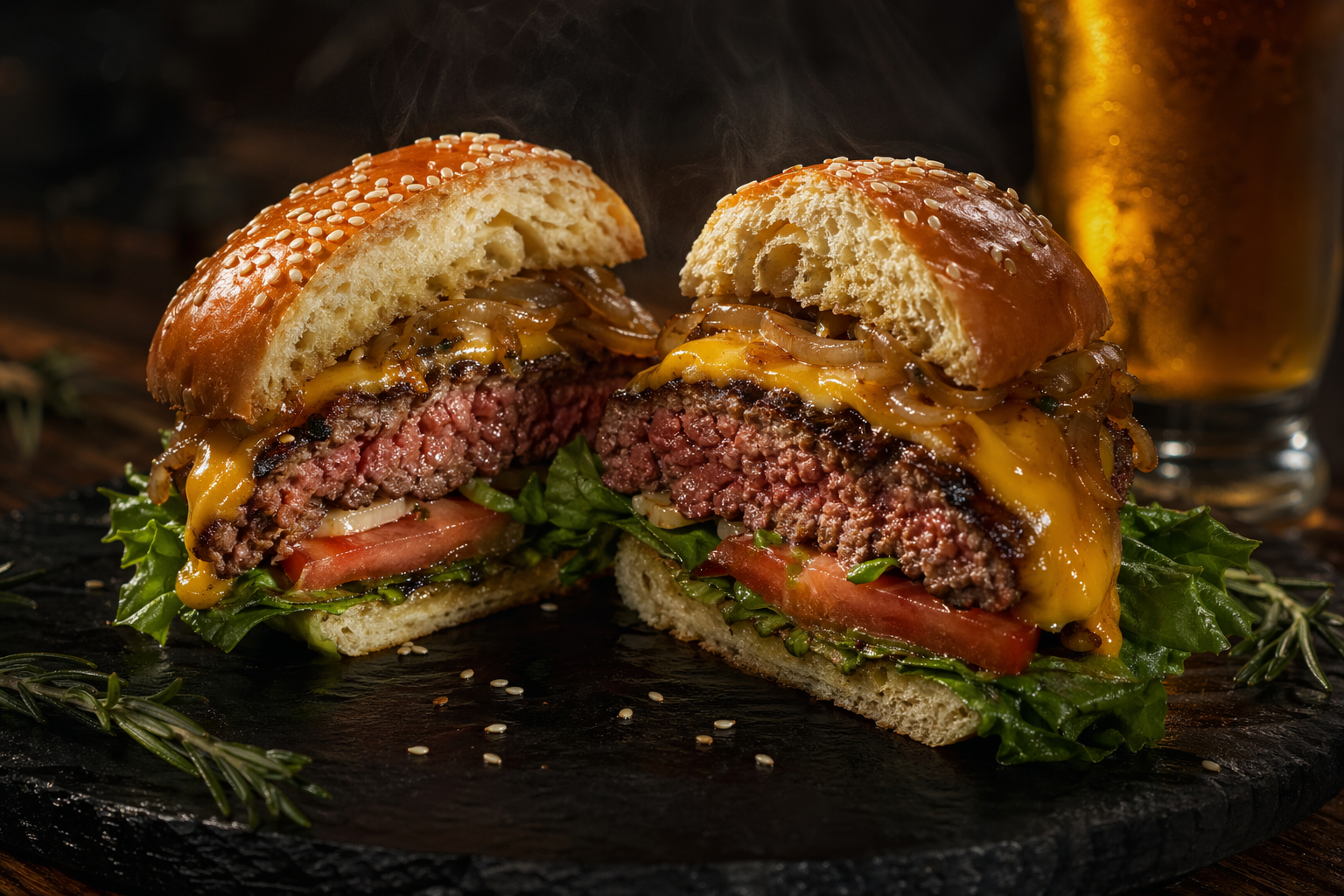
Photographing food is an art. You need to capture freshness, texture, and warmth. GPT-Image 2 understands this semantic layer. It can generate a burger with appetizingly melted cheese, steam rising from a pasta dish, or condensation on a cold drink bottle. High-frequency textures, like seeds on a bun or the crispiness of fried chicken, are rendered with stunning accuracy.
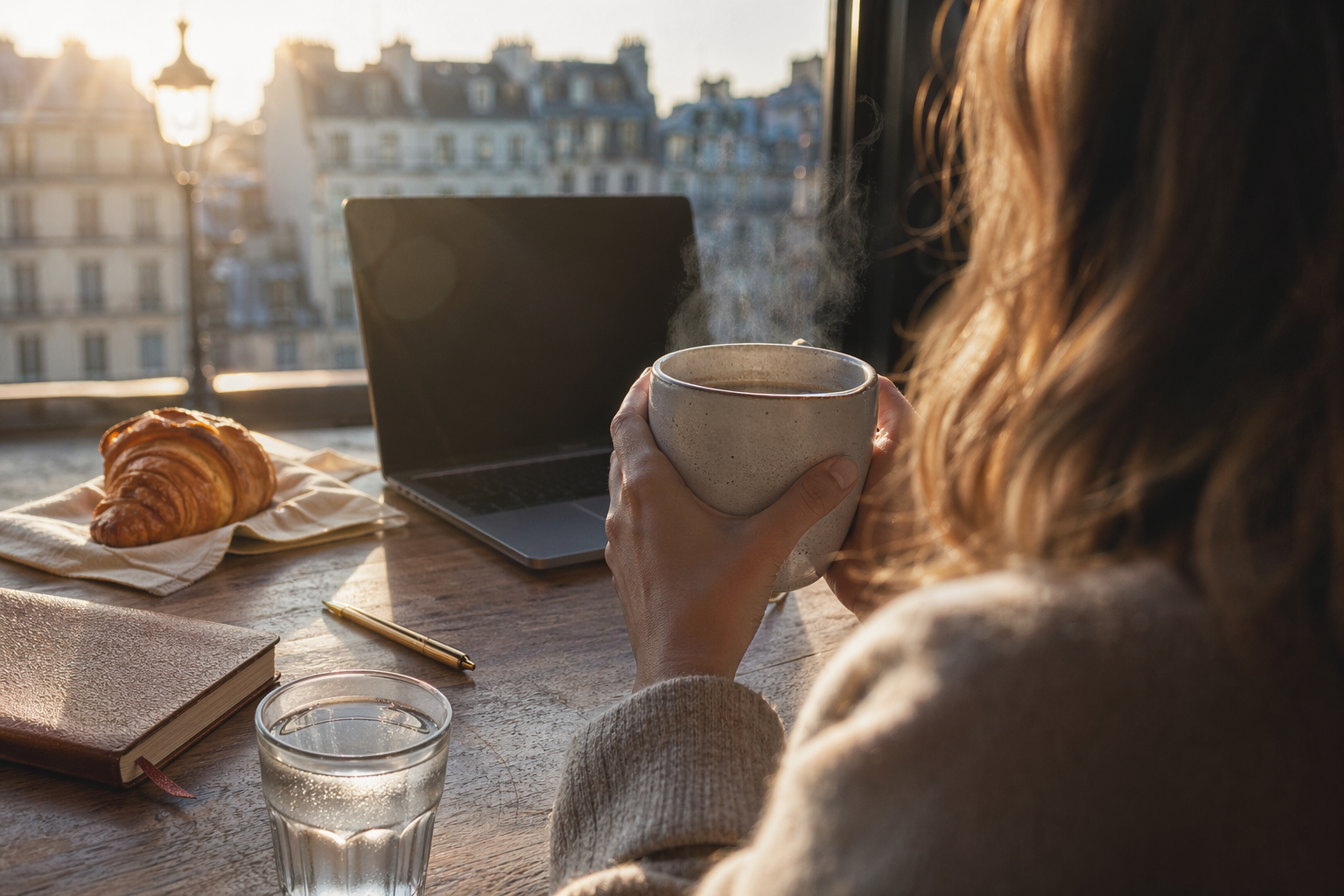
This lifestyle scene, 100% AI-generated, showcases GPT-Image 2's ability to handle believable human interactions and complex natural light—a major asset for authentic ad campaigns.
The Obsession with Detail: Where GPT-Image 2 Pulls Ahead
What separates a good image from an exceptional one often lies in the details. This is where gpt-image-2 becomes truly indistinguishable from reality. OpenAI's engineers focused on aspects that previous models overlooked.
- Micro-Reflections: Look at a watch face or a metal ring. They don't have single, simple reflections, but a myriad of micro-reflections that define the form and material.
gpt-image-2simulates these with breathtaking fidelity. - Bokeh Fidelity: A blurred background isn't just a Gaussian filter. Bokeh has a shape and texture, influenced by the lens aperture and focal length. The model reproduces these optical aberrations with photographic realism.
- High-Frequency Textures: The weave of a fabric, individual strands of hair, skin pores, condensation on fruit... These details, once smoothed over or turned into "noise," are now rendered with exceptional clarity.
- Cast Shadow Management: Shadows are no longer simple dark shapes. They have softer or harder edges depending on distance and inherit the color of the ambient light. This subtlety grounds objects in the scene believably.
These figures, based on our internal benchmarks, show that AI is no longer a compromise but a true lever for productivity and quality. Insights from McKinsey – Growth, Marketing & Sales confirm this trend, highlighting generative AI's impact on scaling personalized marketing content.
How to Master GPT-Image 2 in Market IA
Access to the best model on the market is one thing; knowing how to leverage it is another. In Market IA, we've integrated gpt-image-2 to simplify the creative process while offering maximum control. As we explain in our post on the OpenAI GPT-Image 2 integration in Market IA, no personal API key is required.
Here are the steps for optimal results:
- Brief & Brand Kit: Start by setting up your Brand Kit with your logo, colors, and fonts. Then, write a prompt that is as descriptive as possible. Use photographic terms: "early morning natural light," "shallow depth of field," "85mm lens," "cinematic style."
- Choose the Right Format: For Meta ads (Facebook, Instagram), favor
1:1(square) or9:16(vertical) formats with a resolution like1024x1536. For web banners or YouTube thumbnails, the16:9(1536x1024) format is ideal. - Activate the Logo: Simply check the option for Market IA to contextually integrate your logo onto an element in the image (a bag, a mug, a t-shirt...).
- Use a Reference Image: The "Edit Mode" is extremely powerful. Upload a photo of your product (ideally on a white background) and ask the AI to place it into a new scene. This is the most effective way to ensure perfect product fidelity.
The texture of this dish, the shine of the sauce, and the freshness of the herbs are perfect examples of GPT-Image 2's ability to generate mouth-watering food visuals. This image was created 100% within Market IA.
GPT-Image 2 vs. The Competition: A Matter of Specialization
The generative AI market is white-hot, and it's important to remain objective. Models like Google's Nano Banana 2 are also extremely capable. However, their philosophies differ. Where gpt-image-2 has placed an almost obsessive focus on pure photorealism, other models excel in different areas like artistic stylization, fantasy character creation, or freer, more creative editing capabilities.
Choosing a tool, therefore, depends on the goal. For an advertiser who needs product visuals, lifestyle scenes, or ad campaigns that must look 100% real, gpt-image-2 is, in April 2026, without equal. Our comparison of the best AI ad creative tools breaks down these nuances to help you choose the right technology for every need.
This specialization is a boon, as it allows for the production of visuals perfectly aligned with brand image and conversion goals—a key element to create high-converting landing pages with generative AI in 2026.
Frequently Asked Questions about Photorealistic Image Generation
Can GPT-Image 2 really generate readable text on packaging? +
What format should I choose for Meta or [our TikTok Ads AI creative guide](/en/blog/tiktok-ads-ai-creative-guide-2026) ads? +
Can I inject a photo of my own product into a scene? +
Further Reading
To go deeper, also explore AI landing page creation and our AI creative tools comparison. You can try Market IA for free and generate your own GPT-Image 2 visuals.
Écrit par
Équipe Market IA
L'équipe Market IA vous accompagne dans la création de publicités performantes grâce à l'intelligence artificielle.
Prêt à créer des publicités qui convertissent ?
Rejoignez +2000 e-commerçants qui utilisent Market IA pour créer leurs visuels publicitaires.