In 2026, audio to text transcription has quietly become a foundation pillar of high-performing content strategy. Podcasts, webinars, sales calls, interviews, TikTok and Reels: every second of audio holds a goldmine of keywords, insights and reusable marketing assets. With models like Whisper v4, Gemini 2.5 Pro Audio and GPT-5 Voice, accuracy now exceeds 97% in major languages, even on heavy accents and noisy environments. For marketers, mastering audio to text transcription is no longer a technical nice-to-have: it's a core SEO, creative and operational lever.
This expert guide breaks down the tools, workflows and use cases that move the needle in 2026, with a sharp focus on marketing ROI.
Why audio to text transcription became strategic in 2026
The explosion of audio and video formats has reshaped content production. According to recent figures from Statista's digital advertising hub, more than 62% of global brand content budgets now include a native audio or video component. Without transcription, that content stays invisible to search engines, generative AI and answer engines like Google AI Overviews or ChatGPT Search.
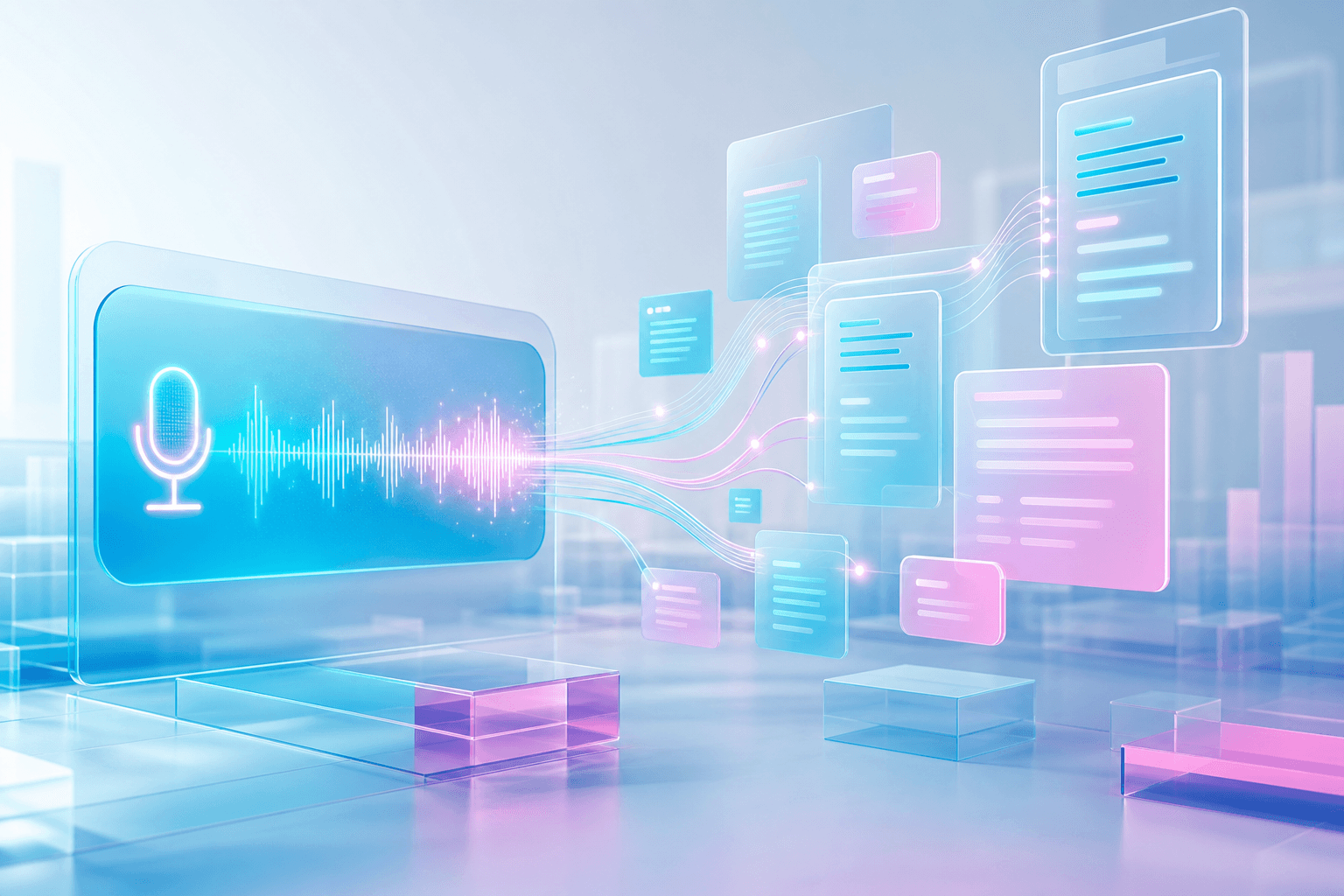
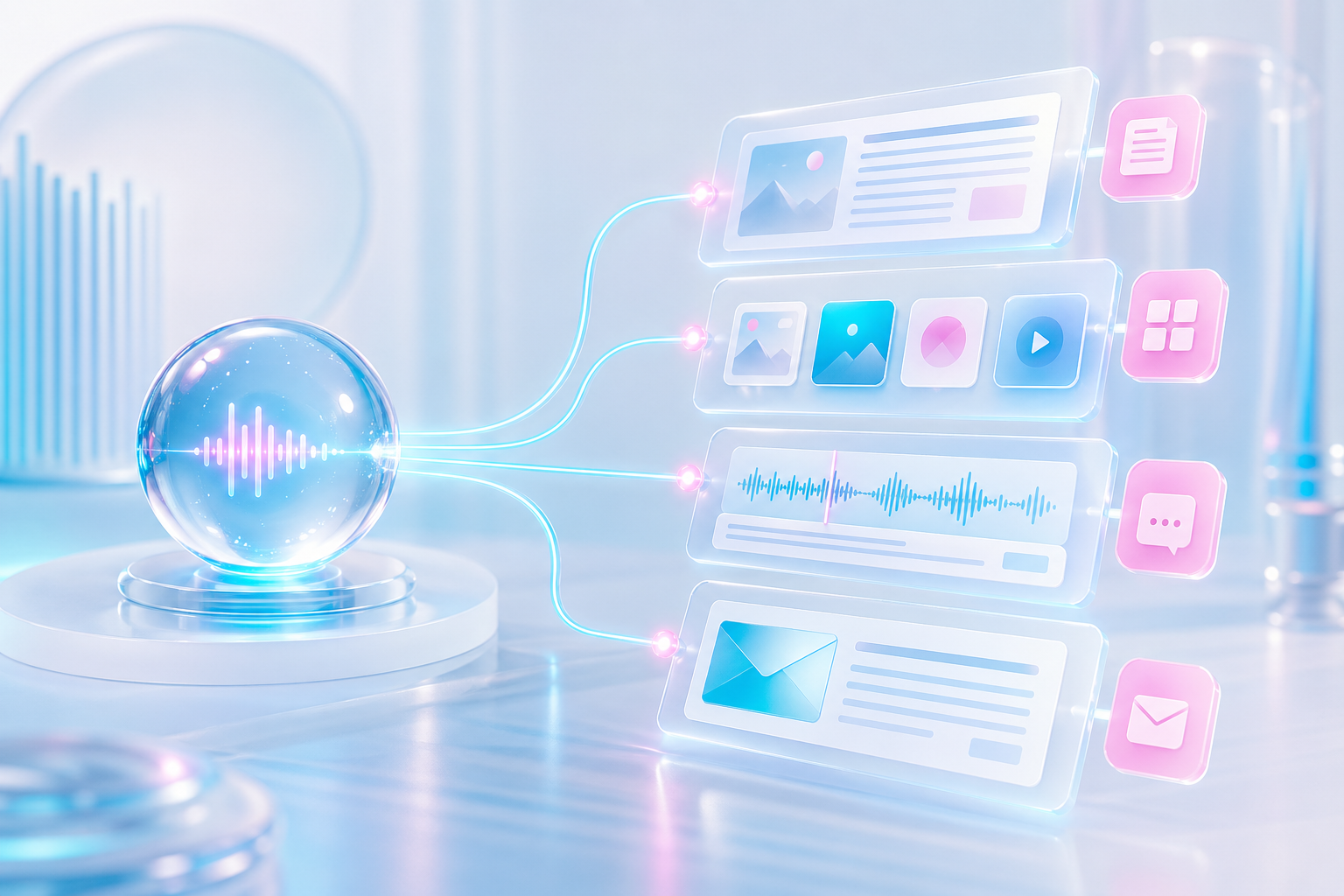
Audio to text transcription turns every sound asset into an indexable, translatable, repurposable resource. Practically, a one-hour podcast becomes:
- 1 long-tail SEO article
- 8 to 10 LinkedIn and X posts
- 4 Instagram carousels
- 1 in-depth newsletter
- Captions for Reels, TikTok and Shorts
- A vector database powering an internal chatbot
It's the exact lever that helps you avoid creative fatigue in paid ads by continuously feeding your content pipelines with original material you've already produced.
The best audio to text transcription tools in 2026
The market has consolidated radically over the past two years. Three families dominate: foundation models (OpenAI, Google, Anthropic), specialized SaaS (Descript, Otter, Riverside, Tactiq) and low-code APIs embedded in marketing suites.
| Tool | Accuracy | Best use case |
|---|---|---|
| Whisper v4 (OpenAI) | 97.8% | High-volume, low-cost API workloads |
| Gemini 2.5 Pro Audio | 98.1% | Long audio (up to 8h), multilingual |
| Descript Underlord | 96.2% | All-in-one podcast and video editing |
| Otter AI 4.0 | 95.7% | B2B meetings and CRM sync |
| AssemblyAI Universal-2 | 97.0% | Product pipelines, advanced diarization |
| Claude 4.5 Voice | 96.9% | Context-aware summarization + transcription |
Your pick depends less on raw accuracy than on downstream workflow. If Reels and Shorts are your jam, Descript wins on text-based editing. For industrial volumes (call centers, training, daily podcasts), the Whisper v4 or Gemini 2.5 Pro Audio API delivers the best cost-to-accuracy ratio.
SEO workflow: turning a transcript into a traffic engine
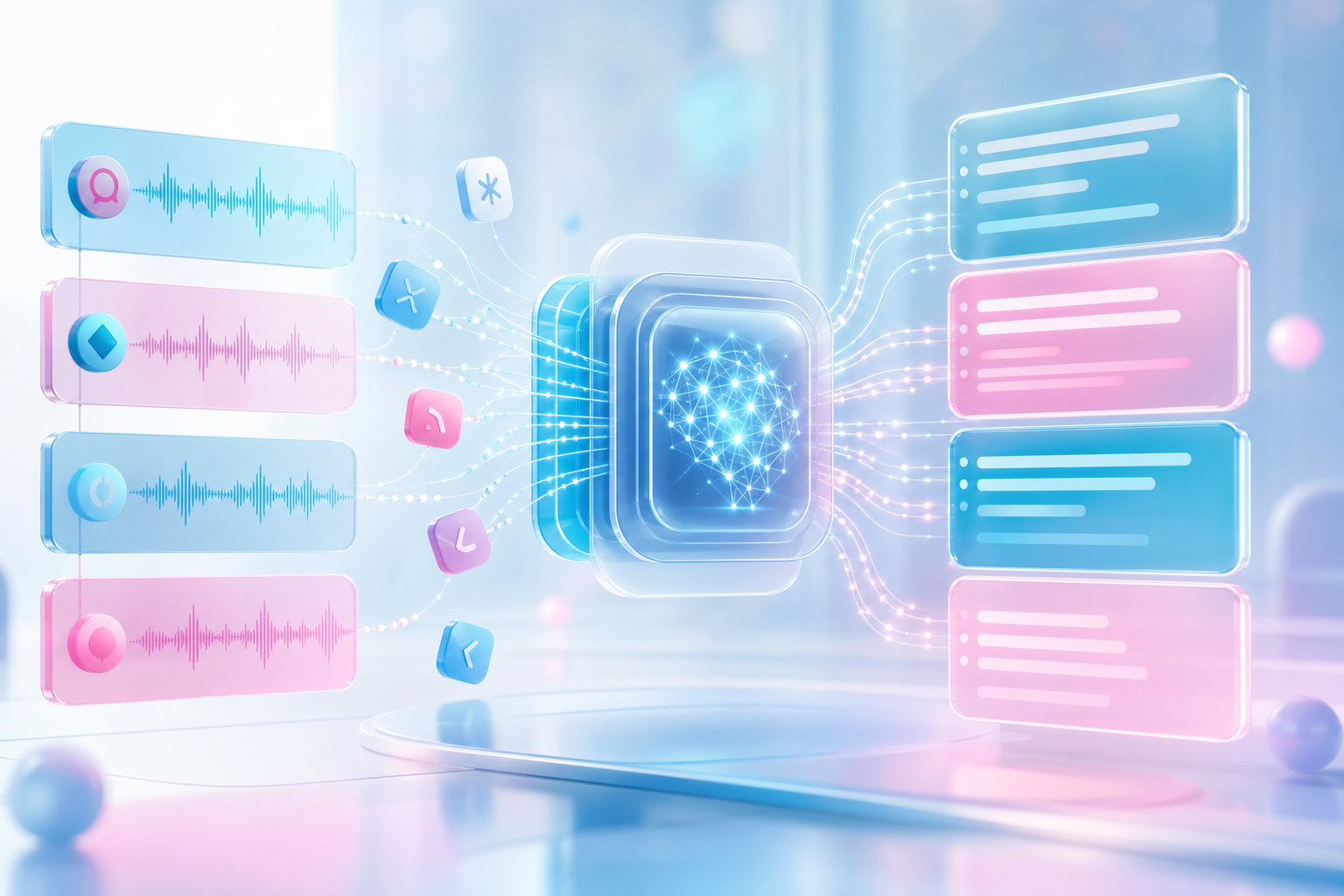
A raw transcript holds no SEO value on its own. The compounding magic comes from AI post-processing. Here's the workflow validated across 400+ podcasts in 2025-2026:
- 1Raw transcription with timestamps and speaker diarization.
- 2AI cleanup: filler removal, clean punctuation, logical paragraphs.
- 3Semantic extraction: named entities, long-tail keywords, search intents.
- 4Rewrite into a structured article (H2, H3, FAQ) using GPT-5 or Claude 4.5.
- 5Enrichment with internal links, generated images, schema.org structured data.
- 6Publication with embedded collapsible transcript to capture both signals.
Teams running this pipeline rigorously report 30-45% organic traffic gains on audio-derived pages, in line with insights surfaced by Think with Google. Google AI Overviews loves dense, structured content sourced from real human conversations.
This pipeline plugs perfectly into a strategy of AI-generated high-conversion landing pages, where each transcript becomes social proof you can deploy as testimonials or product FAQs.
Marketing use cases: 7 high-ROI plays for audio to text transcription
Beyond SEO, audio to text transcription powers a wide range of high-ROI plays:
- Creative repurposing: turn a webinar into scroll-stopping TikTok or Reels scripts.
- Voice of Customer: analyze 100% of sales calls to detect recurring objections.
- Ad creative: extract punchy lines from interviews to use as paid hooks.
- Internal training: index masterclasses into a queryable knowledge base.
- Multilingual subtitles: open an international market in hours, not weeks.
- Compliance: archive and audit regulated communications.
- Personal branding: feed an executive's LinkedIn calendar with verbatim quotes.
For paid social teams, this is a game-changer: the best hooks almost always come from spontaneous conversations, not whiteboard sessions. Combined with a creative production workflow like the one in our TikTok Ads AI creative guide, you get a constant stream of authentic ad angles.
Accuracy, languages and technical challenges in 2026
Despite jaw-dropping progress, audio to text transcription isn't magic. Four watch-outs remain:
- Regional accents and code-switching: a French-English or Spanish-English mix still trips up non-specialized models.
- Domain vocabulary: medical, legal or technical jargon needs fine-tuning or custom glossaries.
- Source audio quality: an entry-level USB mic in an untreated room drops accuracy by 5-8 points.
- Diarization: speaker identification is still imperfect beyond 4 simultaneous voices.
Top platforms now ship custom dictionaries and models fine-tuned on your enterprise vocabulary. For high-stakes content, always plan a 10 to 15-minute human review per hour of audio.
Cost, ROI and budgeting in 2026
Good news: transcription has never been more affordable. APIs charge between $0.002 and $0.006 per minute, ten times less than in 2023. For an SMB producing four one-hour podcasts a month, raw transcription costs $15-30 per year. Most of the bill comes from AI post-processing (article generation, social posts, scripts), typically $50-200 monthly depending on volume.
ROI lands across three axes:
- Editorial time saved: 6 to 8 hours per podcast episode.
- Organic acquisition: +38% average SEO lift on enriched pages.
- Creative performance: +22% CTR on ads whose hooks come from verbatim customer language.
A complementary play is to pair transcription with AI ad creative tools to close the production-to-distribution loop. Insights from McKinsey's growth, marketing and sales practice confirm that vertical content integration (audio → text → visual → ad) delivers productivity gains north of 40% among early adopters.
FAQ: audio to text transcription
What's the best free audio to text transcription tool in 2026? +
Does audio to text transcription actually help SEO? +
How long does it take to transcribe one hour of audio? +
How do I keep transcribed data confidential? +
Conclusion: audio to text transcription, the foundation of AI marketing in 2026
Audio to text transcription is no longer an accessory feature: it's the infrastructure that connects your human content to your AI pipelines. In 2026, marketers who industrialize this layer secure a structural advantage in SEO, paid creative and customer intelligence at the same time. With our Market IA platform, you get a unified workflow that turns every audio asset into SEO articles, ad creatives and ready-to-launch campaign angles. Stop producing at a loss: capitalize on every spoken word.
Écrit par
Équipe Market IA
L'équipe Market IA vous accompagne dans la création de publicités performantes grâce à l'intelligence artificielle.
Prêt à créer des publicités qui convertissent ?
Rejoignez +2000 e-commerçants qui utilisent Market IA pour créer leurs visuels publicitaires.