In April 2026, a Google announcement is once again redefining the standards of ad production. This AI marketing news isn't just a simple update, but a major strategic overhaul: the launch of Google Asset Studio. Billed as "your one-stop shop to bring your creative vision to life," this tool integrated within Google Ads promises to centralize, generate, and adapt creative components using Google's most advanced AI, powered by the Gemini 2.5 and 3 Pro models. For marketers, it promises unprecedented creative velocity and relevance. But beyond the hype, what are the concrete implications for your campaigns? Let's analyze what Asset Studio really changes.
What is Google Asset Studio? The New Creative Hub
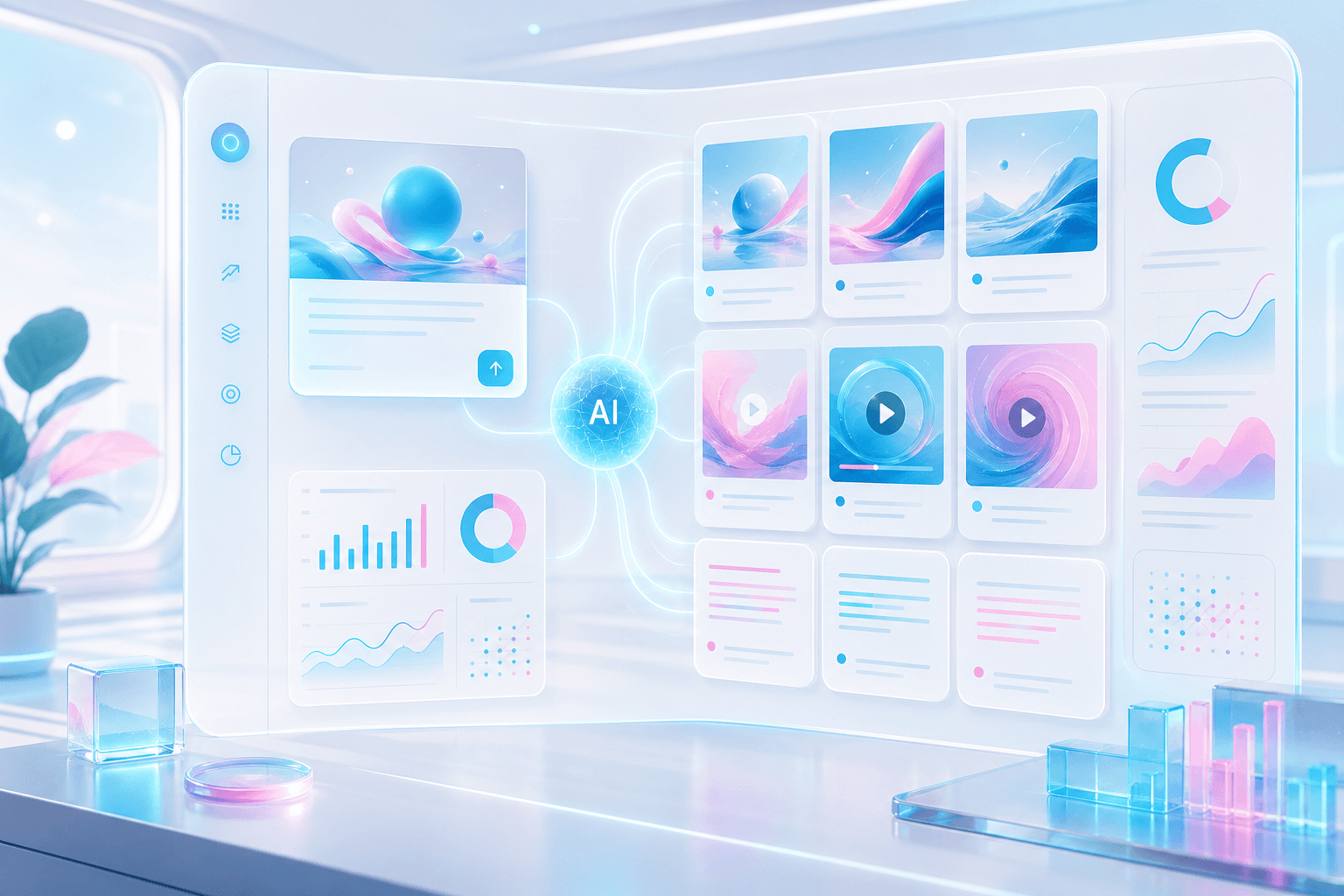
Asset Studio is Google's answer to a major challenge for advertisers in 2026: producing creatives at scale that can adapt in real-time to the multiple formats and audiences of Performance Max campaigns. According to the official Google announcement, it is a unified "creative destination" within Google Ads.
Specifically, the tool allows you to:
- Generate images and videos from text prompts, directly in the advertising interface.
- Remix existing assets: Upload a product image and ask the AI to generate new scenes, backgrounds, or seasonal variations.
- Automatically adapt formats: Create a square visual, and Asset Studio instantly converts it into a Story (9:16), landscape (16:9), and other formats by intelligently recomposing the elements.
- Maintain a centralized, smart library of all your assets, easily accessible for all your campaigns.
This tool integrates natively with Performance Max campaigns, providing the algorithms with a constant stream of new creatives to test for performance optimization.
The Context: Why Google is Unifying its Creative Suite Now
Asset Studio's launch is no accident. It's part of a fundamental trend where creative has once again become the main performance lever in a largely automated advertising ecosystem. Audiences, bidding, placements... everything is managed by AI. The only variable where humans (partially) retain control is the creative.
Google faces fierce competition from platforms like Meta and TikTok, whose integrated creative tools (Advantage+ Creative, TikTok Symphony) are extremely powerful and popular with advertisers. To remain competitive, Google had to offer an equally seamless and integrated experience, to reduce the creative fatigue that plagues so many campaigns. By centralizing tools, Google not only simplifies marketers' work but also collects valuable data on which assets perform best, thereby refining its own AI models.

Implication #1: The End of Friction Between Ideation and Production
For many teams, the lifecycle of an ad creative is long and costly: brief, back-and-forth with designers, multiple versions, platform integration... Asset Studio short-circuits this process. A performance marketer can now test a creative hypothesis in minutes.
- Hypothesis: "My products would sell better with a spring-themed background."
- Old workflow: Brief a designer, wait for mockups, approve, receive exports, upload them.
- New workflow: Upload the product image to Asset Studio, prompt "Add a spring background with cherry blossoms and soft light," generate 10 variations, and push them directly into a PMax campaign.
This radical agility transforms the marketer into a real-time "creative director," able to react instantly to trends or early campaign performance data.
Implication #2: Hyper-Personalization of Assets at an Industrial Scale
One of the biggest challenges in digital advertising remains personalization. With Asset Studio, the AI's ability to generate nearly infinite variations allows for an unprecedented level of granularity. We can envision campaigns where creatives are adapted not just by audience group, but based on micro-segments or specific triggers.
Imagine a fashion retailer. Asset Studio could generate visuals:
- With a Parisian background for an audience located in the Paris area.
- With a sunnier vibe for southern audiences.
- Highlighting a specific color if the user has previously viewed items in that color.
This ability to mass-produce custom creatives is a boon for optimizing ROAS with Google AI, as ad relevance is a key driver of CTR and conversion rates.
| Criteria | Classic Creative Workflow (2024) | Workflow with Google Asset Studio (2026) |
|---|---|---|
| Production Speed | Slow (days/weeks) | Instantaneous (minutes) |
| Cost per Creative | High (human cost) | Near-zero (included in Google Ads) |
| Testing Capacity | Limited (3-5 variations) | Unlimited (hundreds of variations) |
| Format Adaptation | Manual and time-consuming | Automated and intelligent |
| Dependency | High reliance on creative teams/agencies | Autonomy for the performance marketer |

Implication #3: A New Standard for Creative-Driven ROAS
The ultimate impact is measured in performance. By supplying a much larger volume and variety of assets to the Performance Max algorithm, Asset Studio enables Google's AI to work better. According to the latest studies from Think with Google, providing more than 15 high-quality image assets and 5 video assets can increase conversions by over 20% at an equal CPA.
Asset Studio makes this goal not just achievable but easily surpassable. The feedback loop is much faster: the AI tests the generated creatives, identifies high-performing elements (a type of background, a headline style, a CTA color), and the marketer can use these insights to guide the next wave of generation in Asset Studio. This marks the dawn of marketing where creative strategy is co-piloted by human and machine, based on real-time data. It's a paradigm shift from older AI creative tool comparisons that were often disconnected from the delivery platforms.
Our Recommendations: How to Integrate Asset Studio into Your Strategy
The arrival of Asset Studio doesn't mean the end of art directors. On the contrary, it redefines their role towards more strategy and supervision. Here's how to prepare:
- 1Level up your prompt engineering skills: The quality of the generated creatives will depend on the quality of your instructions. Learn to precisely describe moods, styles, and compositions.
- 2Rethink your creative workflows: Integrate Asset Studio as a brainstorming and rapid iteration tool, upstream or in parallel with your "premium" productions with designers.
- 3Adopt a mindset of constant testing: Use Asset Studio to create dozens of variations around a hypothesis and let the PMax data guide you. Don't get attached to a single "perfect creative" anymore.
- 4Analyze performance at the asset level: Dive into PMax reports to understand which types of images, scenes, or messages generated by the AI resonate best with your audience.
In conclusion, this AI marketing news confirms that 2026 is the year AI generation becomes an integrated commodity at the heart of advertising platforms. Google Asset Studio is not just a tool; it's a statement of intent: the future of ad performance will be won by marketers who can collaborate with AI to generate relevant creativity at a massive scale. The teams that master this new dynamic will gain a decisive edge. To go further and master creative generation across all platforms, discover our AI generation platform.
Frequently Asked Questions about Google Asset Studio
Is Google Asset Studio free? +
Which AI models does Asset Studio use? +
Does this replace the need for designers? +
Écrit par
Équipe Market IA
L'équipe Market IA vous accompagne dans la création de publicités performantes grâce à l'intelligence artificielle.
Prêt à créer des publicités qui convertissent ?
Rejoignez +2000 e-commerçants qui utilisent Market IA pour créer leurs visuels publicitaires.