
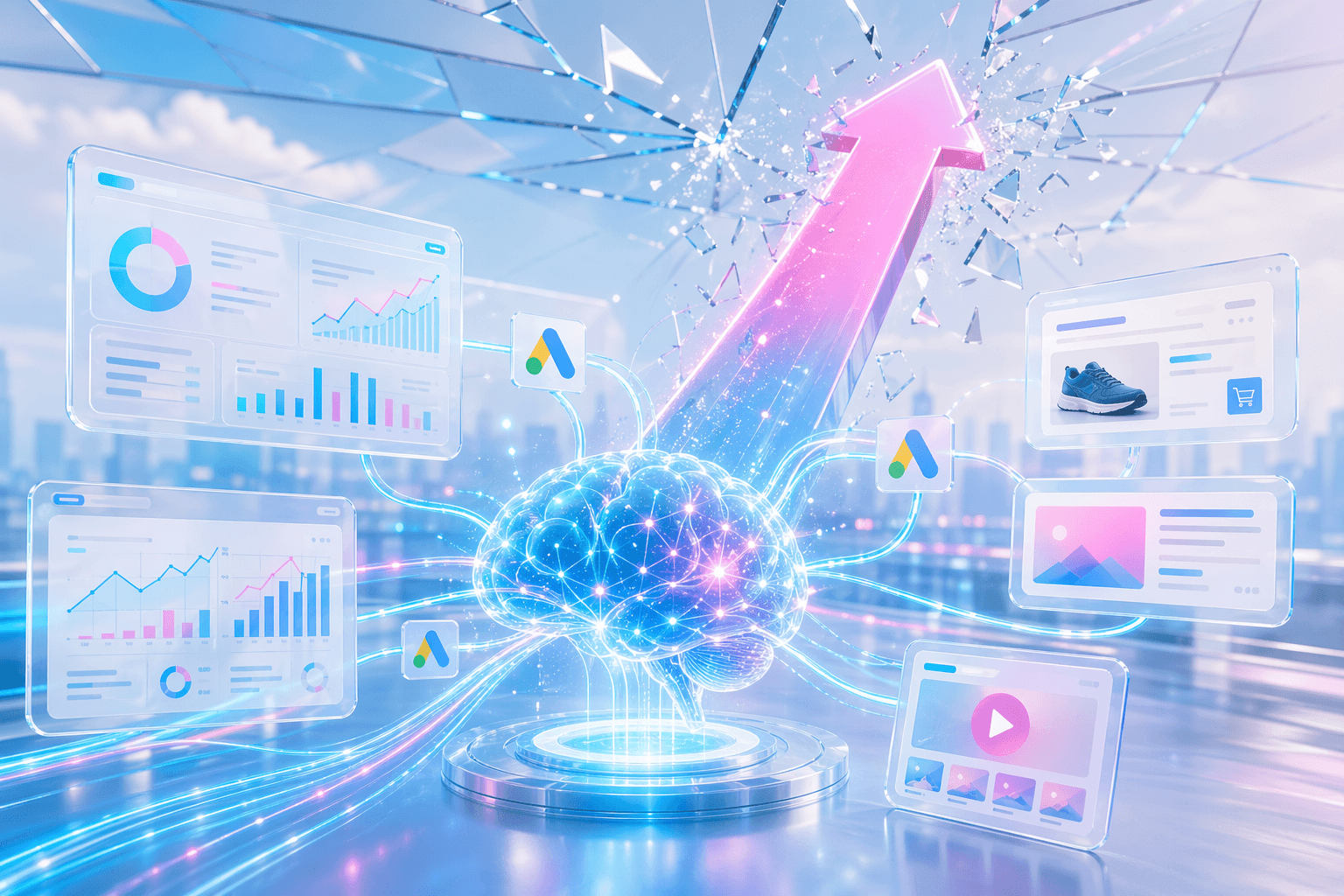
In April 2026, running ad campaigns without advanced artificial intelligence is like navigating a storm with just a compass. The digital marketing landscape has been completely reshaped by AI, and nowhere is this transformation more evident than on Google. Forget manual bid adjustments and tedious A/B testing; today, performance relies on predictive AI agents, on-the-fly generative creatives, and a granular understanding of the customer journey. For advertisers, the question is no longer if you should use AI, but how to leverage it to achieve a stratospheric return on ad spend (ROAS).
This article is your guide to mastering Google's AI tools in 2026, transforming your campaigns, and leaving your competition in the dust.
Understanding ROAS in the Era of Google's Predictive AI
ROAS has always been the North Star metric for marketers. However, its meaning has evolved profoundly. Historically reactive, the ROAS calculation has become a predictive science thanks to AI. The latest models like Gemini 3 Pro, now at the core of the Google ecosystem, don't just analyze past performance. They anticipate the potential lifetime value (LTV) of each user before the first click.
This predictive capability changes everything. Smart bidding strategies no longer just optimize for an immediate conversion; they allocate budget to acquire the customers who will be most profitable in the long run. It's a fundamental paradigm shift that moves the value of human action from micro-management to strategic oversight.
ROAS predictions will be.Google Ads AI Agents: Your New Performance Co-Pilots
Performance Max (PMax) campaigns of 2024 were just a preview. In 2026, we're no longer talking about mere campaign types, but true autonomous AI agents integrated into Google Ads. These co-pilots continuously analyze billions of signals to make real-time decisions across all levers:
- Dynamic Budget Allocation: Budgets are shifted automatically between channels (Search, YouTube, Display, Discover) based on conversion probabilities and expected profitability.
- Predictive Targeting: AI builds "latent" audiences by identifying behavioral patterns that predict purchase intent, far beyond traditional demographic segments.
- Creative Optimization: The agent assembles and tests thousands of combinations of headlines, descriptions, images, and videos to serve the perfect ad to each user.
According to a late 2025 study from Statista – Digital Advertising, companies that fully adopted AI agents in their ad accounts saw dramatic improvements.
Generative AI for Effortless, High-Converting Creatives
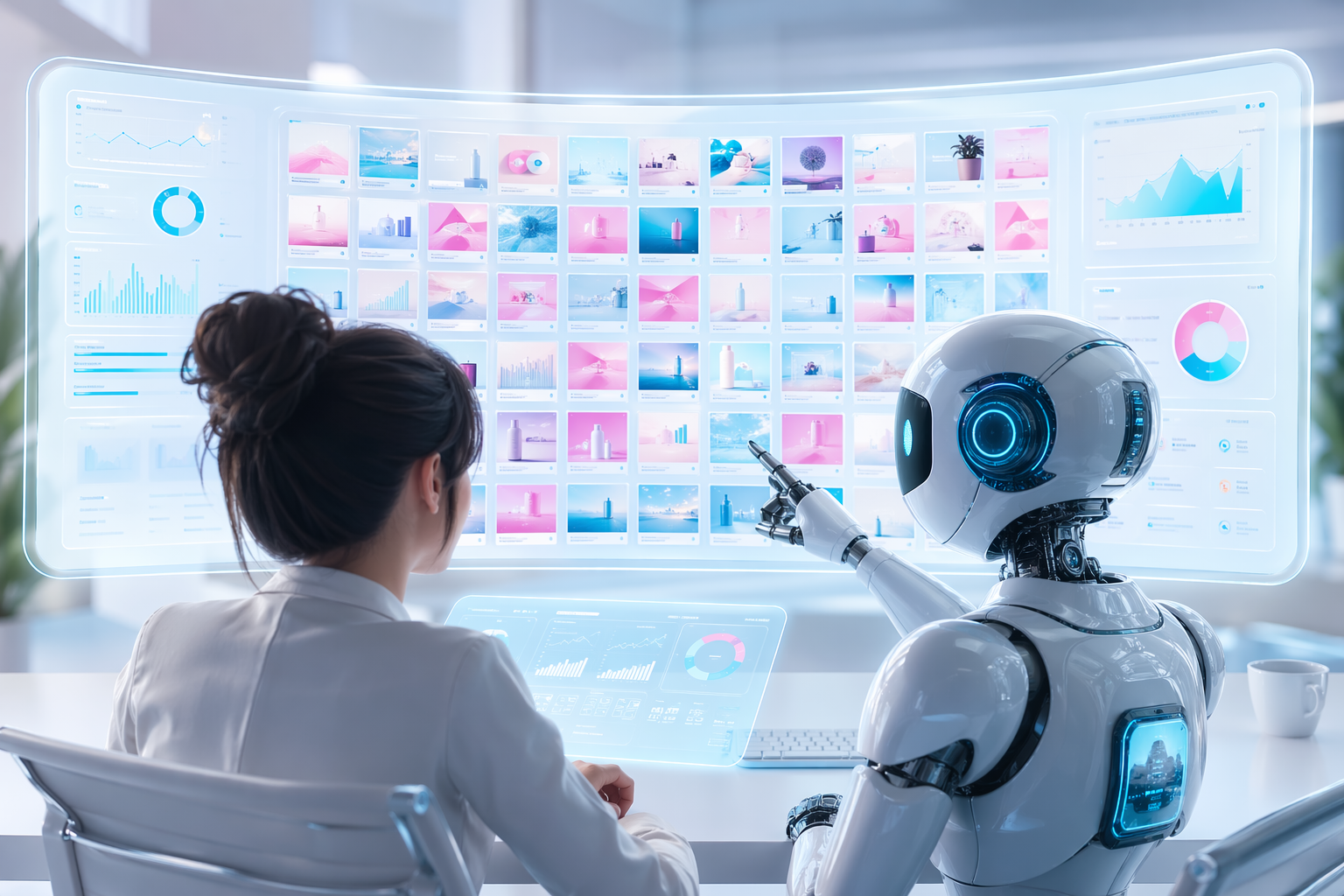
The biggest performance bottleneck has long been creative production. In 2026, generative AI, powered by models like GPT-5 and Google's own AI family, has shattered this barrier. It is now possible to generate high-performing ad assets in seconds:
- Text: Headlines, descriptions, and CTAs are generated and adapted to the context of each search and user profile.
- Image: Photorealistic or illustrated visuals are created on demand, allowing for unlimited testing.
- Video: Tools like TikTok Symphony or Google's integrated equivalents can assemble short video ads from simple prompts and your product assets.
This creative abundance is a powerful weapon against ad fatigue. If you want to dive deeper, our guide explains how AI helps overcome creative fatigue. To find the best platforms, you can check our comparison of AI tools for ad creatives.
Beyond Clicks: AI for Accurate Attribution and Tracking
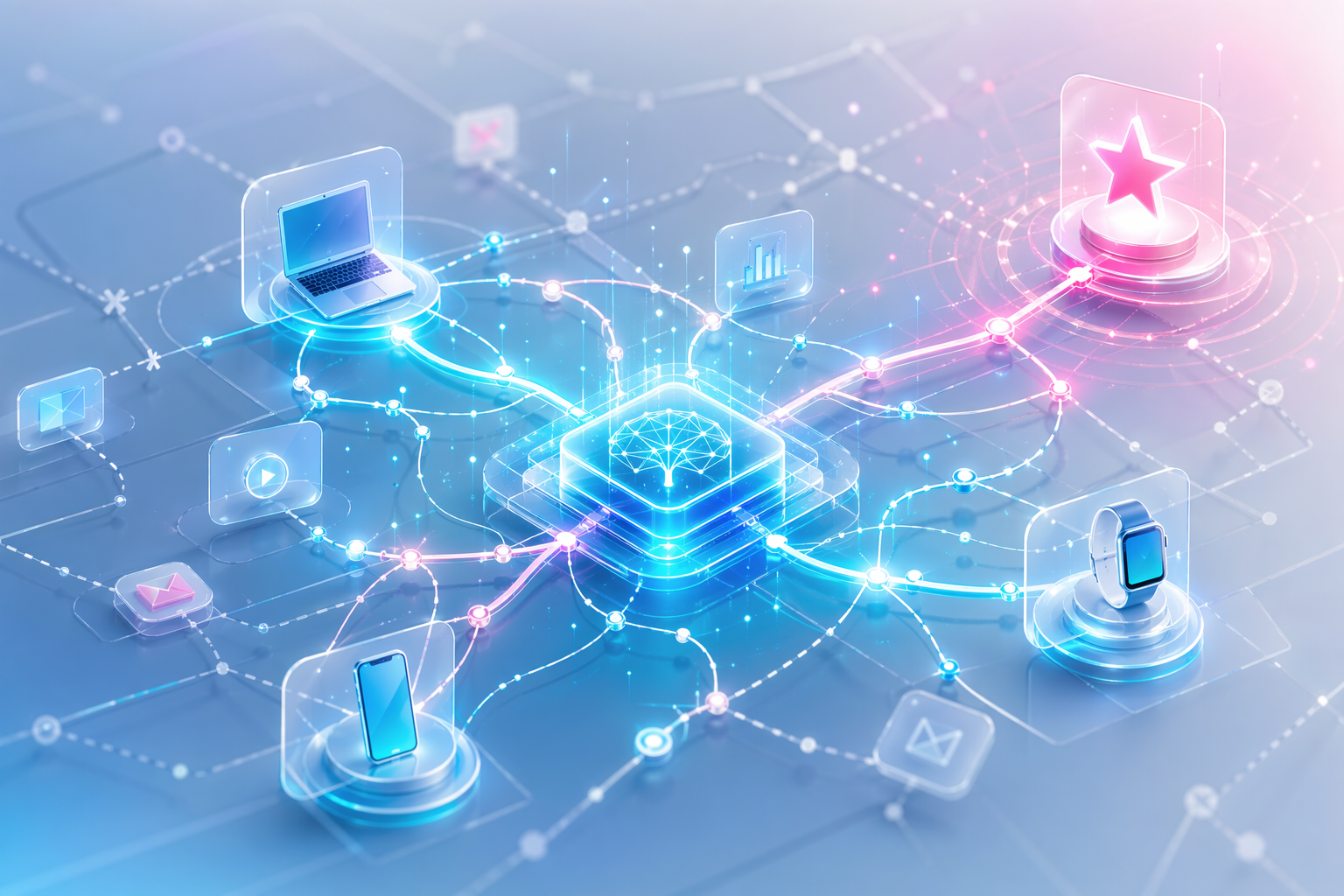
In a post-cookie world, attribution has become a major challenge. AI is the only viable solution to piece together increasingly fragmented customer journeys. AI-driven attribution models, like the ones we detail in our guide to Google's Merlin model, analyze aggregated and anonymized data to determine the true contribution of each touchpoint.
By connecting data from Google Ads with Google Search Console, AI can now correlate organic search behaviors with ad interactions, providing a 360-degree view of user intent. Tracking no longer stops at the conversion; it predicts future profitability.
| Criterion | Classic Attribution (Last Click) | AI Attribution (Data-Driven 2026) |
|---|---|---|
| Accuracy | Low, ignores upper-funnel touchpoints | Very high, weights every interaction |
| Vision | Single-channel, siloed view | Cross-channel and cross-device |
| Optimization | Reactive, based on the final click | Predictive, optimizes for LTV |
| Cookie Dependency | Very high | Low, based on modeling |
How to Use Free Online AI Tools to Boost Your Campaigns
Access to AI has been democratized. You don't always need to invest heavily to start reaping the benefits. A multitude of free online AI tools can supplement your Google strategy.
- Brainstorming & Ideation: Use free tiers of Claude 4.x or Gemini 2.5 to generate ad angles, personas, or content ideas.
- Trend Analysis: Combine data from Google Trends with an AI prompt to identify emerging micro-trends and create reactive campaigns.
- Collaboration: Structure your AI-generated campaign briefs in a shared Google Docs file to streamline collaboration between your marketing and creative teams.
AI and Personal Data: The Impact on Google Targeting
The topic of AI and personal data is a central concern in 2026. With the end of third-party cookies, how does AI manage to target effectively while respecting privacy? The answer lies in modeling and analyzing aggregated signals, an approach the Google AI Blog regularly details.
Rather than tracking individuals, Google's AI analyzes billions of anonymized data points to:
- 1Understand Context: The page content, time of day, geolocation, etc.
- 2Use First-Party Data: Your own customer lists are used to create secure lookalike audiences.
- 3Model Conversions: For users who opt out of tracking, AI models their likely behavior based on similar users who have opted in.
Conclusion: AI is the New Standard for Google Performance
In 2026, ignoring artificial intelligence in your Google strategy is no longer an option. It is the engine that powers every aspect of performance, from bidding strategy and ad creation to ROAS measurement. Successful marketers are those who have learned to collaborate with these powerful algorithms, providing them with clear objectives and quality data. They have traded time-consuming manual management for strategic oversight, letting AI handle the infinite complexity of real-time optimization.
The future of Google advertising is already here. Are you ready to take the controls?
How is the Google search bar affected by AI in 2026? +
What's the best AI model for advertising in 2026: GPT-5 or Gemini 3 Pro? +
Écrit par
Équipe Market IA
L'équipe Market IA vous accompagne dans la création de publicités performantes grâce à l'intelligence artificielle.
Prêt à créer des publicités qui convertissent ?
Rejoignez +2000 e-commerçants qui utilisent Market IA pour créer leurs visuels publicitaires.