
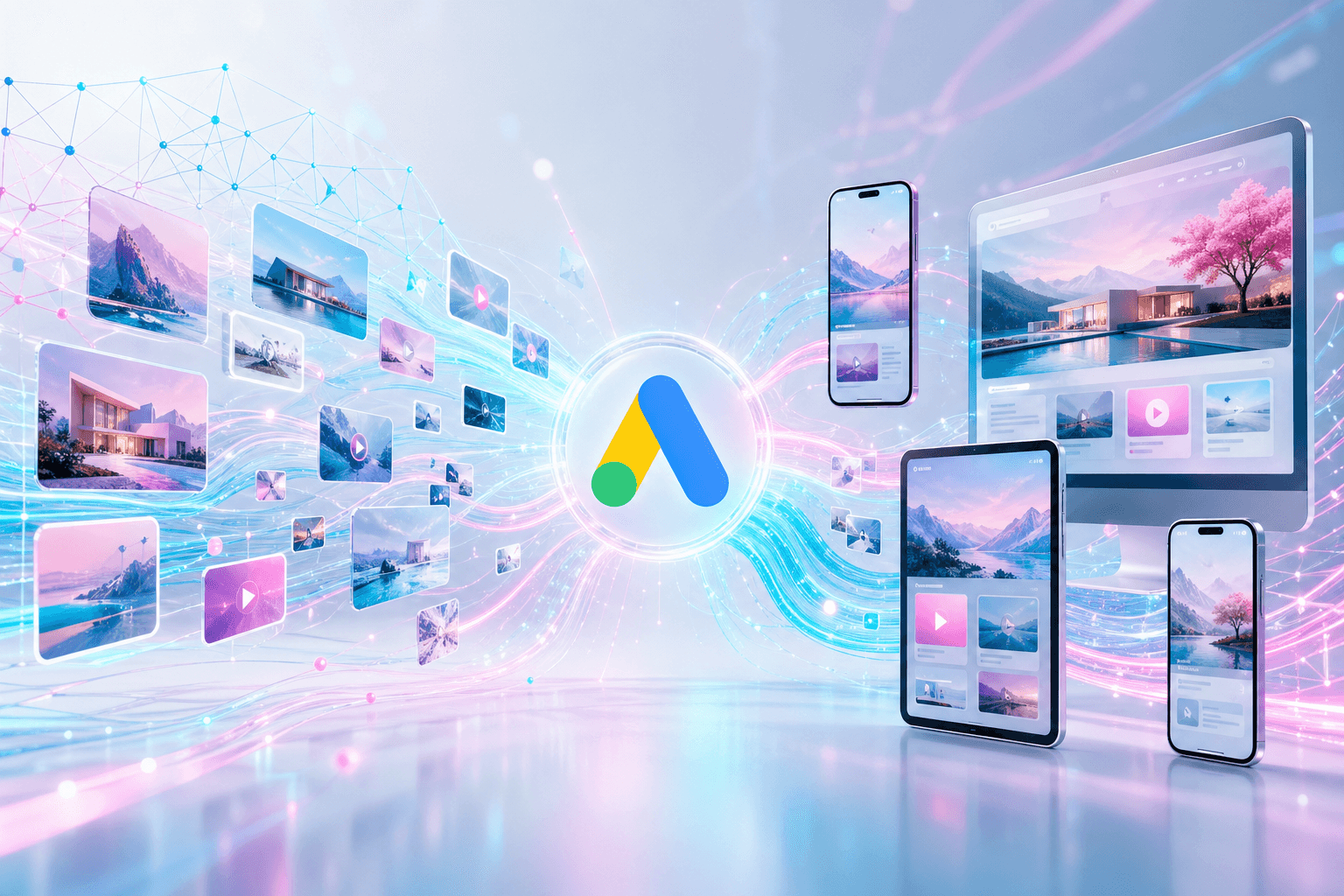
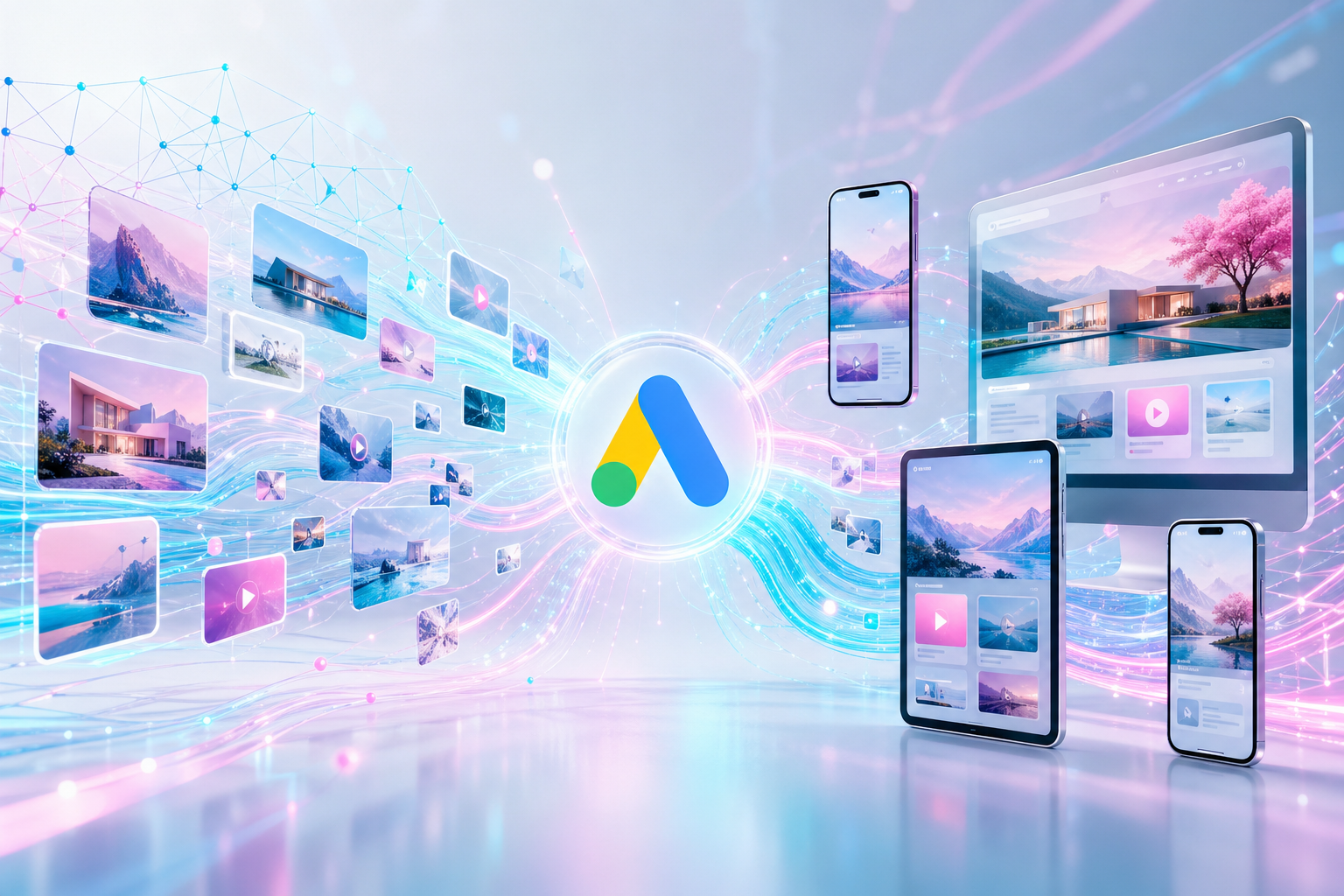
In April 2026, the battle for ad performance is being fought more fiercely than ever on the creative front. As advanced models like GPT-5 and Gemini 3 Pro make high-quality text and image generation a commodity, ad platforms are racing to integrate these capabilities into their core toolsets. The latest major AI marketing news comes from Mountain View: Google is rolling out Asset Studio, a new creative suite built directly into Google Ads. Billed as a "one-stop shop to bring your creative vision to life," this tool promises to reshape how advertisers produce and deploy their visuals. But beyond the announcement, what's the real-world impact for marketers? Here's our analysis.
What is Google Asset Studio? The New AI Creative Hub
Asset Studio is Google's answer to a major challenge for advertisers in 2026: the constant need for fresh, high-performing creatives to fuel increasingly automated campaigns like Performance Max. According to the official Google announcement, it's a centralized destination within Google Ads that allows you to:
- Generate creative assets: Background images, headlines, and soon, short video scenes based on text prompts and existing resources (like a product page).
- Adapt existing creatives: AI can crop, extend an image (outpainting), or remix it to fit the multiple formats of the Google ecosystem (YouTube Shorts, Display, Discovery).
- Build complete ads: Assemble these different components to create ready-to-use visual ads, directly within the campaign creation workflow.
This initiative is part of a broader trend and marks a significant piece of AI marketing news. It aims to reduce the friction between strategy and execution by putting generative tools directly in the hands of campaign managers.

The 2026 Context: Why Is Google Launching Asset Studio Now?
This announcement's timing is no accident. It responds to several market pressures and opportunities in digital marketing which, according to the latest Statista data on digital advertising, continues its exponential growth fueled by AI. This development in AI marketing news is driven by three key factors:
- 1The Creative Bottleneck: AI-driven campaigns like Performance Max are asset-hungry. A lack of creative diversity and freshness is the primary cause of the ad fatigue that kills campaign performance.
- 2The Democratization of GenAI Tools: Third-party platforms, like Market IA, have proven the market's appetite for specialized ad creative generation solutions. Google had to offer a native solution to keep advertisers within its ecosystem.
- 3Optimizing Google's Own AI Models: For its own algorithms (like those in PMax) to perform optimally, Google needs varied data. By providing the tool to create this variety, Google ensures it's feeding its models with the best possible fuel.
Impact #1: Closing the "Creative Gap" for Performance Max Campaigns
The first major impact directly affects Performance Max users. Until now, the success of these campaigns depended on the advertiser's ability to manually provide a large quantity of high-quality images, videos, and texts. An asset shortage almost always resulted in suboptimal delivery and a disappointing ROAS.
Asset Studio closes this "creative gap." A marketer can now generate a dozen background visuals, five headlines, and three logo variations from a simple product URL and a few ideas. The PMax AI can then pull from this enriched asset pool to assemble far more numerous and relevant ad combinations. This reinforces the idea that knowing how to optimize Google ROAS with AI is crucial, and Asset Studio becomes a direct lever to achieve that.

Impact #2: Automating Multi-Format Adaptation at Scale
The second benefit, and perhaps the most appreciated in day-to-day work, is the streamlining of multi-format production. Adapting a high-performing square creative from a feed to a 9:16 vertical format for a YouTube Short is a time-consuming and often frustrating task. Asset Studio's "Image Expansion" features, powered by Google's latest diffusion models, promise to solve this problem.
In practice, the AI can intelligently extend the borders of an image to fit a new ratio, generating a coherent background. For marketers, this means significant time savings and the assurance of an optimized presence across the entire Google inventory. Every piece of AI marketing news that reduces low-value tasks is a win for strategy.
Impact #3: A New Era of High-Velocity Creative Testing
Rapid generation means supercharged testing capabilities. As numerous analyses from McKinsey on marketing and growth have shown, creative is a massive performance lever. Asset Studio will allow advertisers to systematize creative testing on an unprecedented scale.
Instead of launching a campaign with two or three visuals, a marketer can generate twenty with variations in color, composition, or style. By quickly analyzing early performance signals (CTR, conversion rates), they can identify winning creative directions and double down. This velocity in iteration is fundamental to continuously improving results and better understanding Google's AI attribution model.
Asset Studio vs. Third-Party Tools: What's Your Strategy?
The arrival of Asset Studio raises a strategic question: should you abandon third-party image generation tools like Midjourney, Ideogram, or specialized platforms like Market IA? The answer is nuanced. Each approach has its advantages.
| Criteria | Google Asset Studio | Specialized Platforms (e.g., Market IA) |
|---|---|---|
| Integration | Seamless and native to Google Ads. Frictionless workflow. | Requires import/export, but is multi-platform (Meta, TikTok...). |
| Specialization | General-purpose, optimized for the Google ecosystem. | Specialized in ad creative, models fine-tuned for conversion. |
| Creative Control | Good for basics, but potentially more "guided" and standardized. | Granular control (inpainting, composition, brand safety) and unique styles. |
| Cost | Included with Google Ads spend. | Separate subscription, but ROI is driven by performance lift. |
| Strategic Agility | Excellent for quick adaptations and incremental tests. | Ideal for developing a strong creative concept and deploying it across all channels. |
FAQ: Your Questions on Google Asset Studio and AI Marketing
Does Asset Studio replace human creatives (designers, copywriters)? +
Do I need prompt engineering skills to use Asset Studio? +
How does Asset Studio integrate with Google's other AI tools? +
Conclusion: Another Step Toward Autonomous Advertising
The launch of Google Asset Studio is AI marketing news that confirms a major trend: the increasing automation of the entire advertising value chain. By integrating creative generation directly into its platform, Google not only simplifies marketers' lives; it strengthens its ecosystem and makes its own AI campaigns more effective. For advertisers, this is an opportunity to gain agility, accelerate testing, and focus on strategy over production. The challenge will be to avoid a standardization of creatives and continue to stand out.
The key to success in 2026 will lie in a smart, hybrid approach, combining the power of native tools like Asset Studio for velocity and specialized platforms like Market IA for creative excellence and multi-channel performance.
Écrit par
Équipe Market IA
L'équipe Market IA vous accompagne dans la création de publicités performantes grâce à l'intelligence artificielle.
Prêt à créer des publicités qui convertissent ?
Rejoignez +2000 e-commerçants qui utilisent Market IA pour créer leurs visuels publicitaires.