
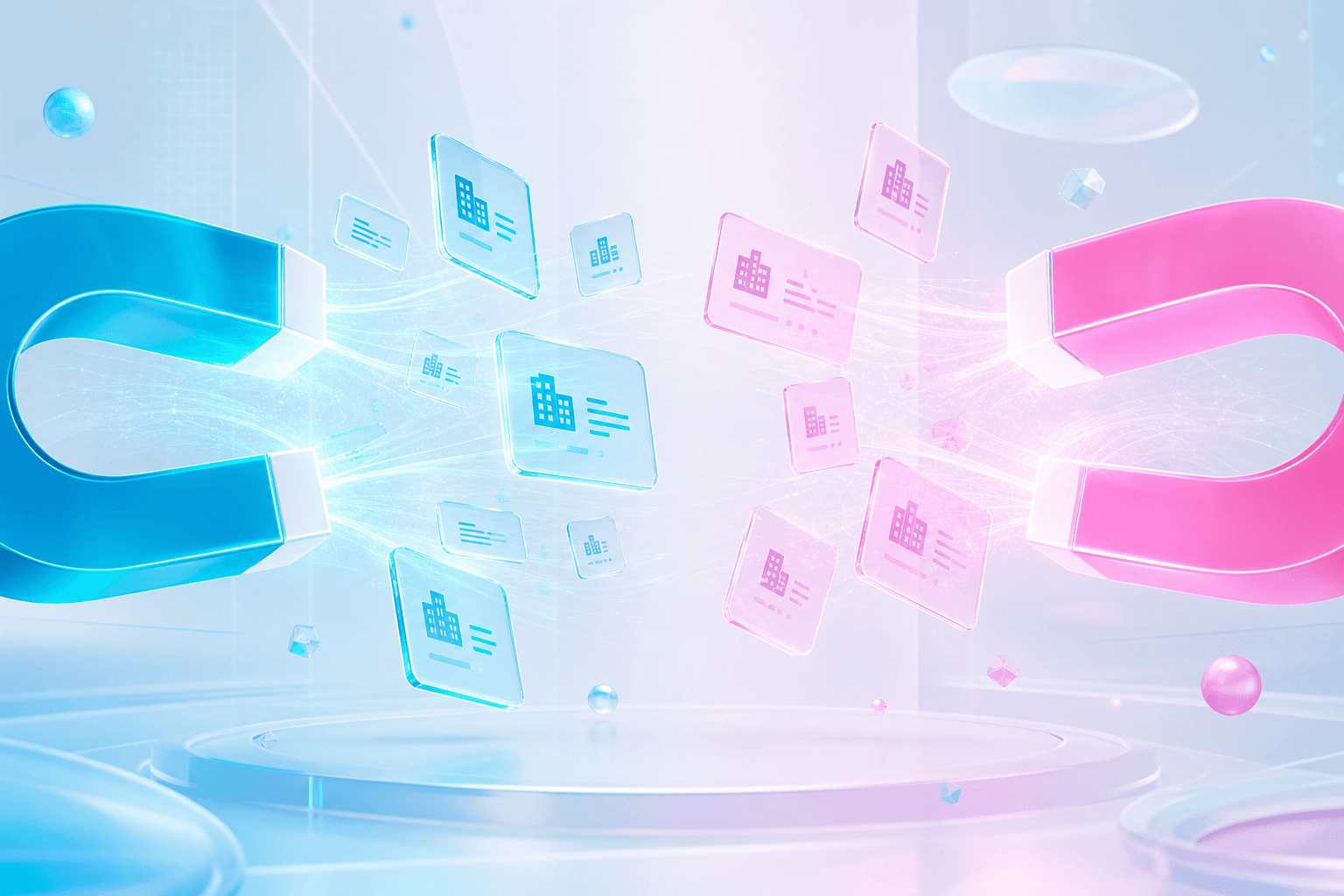
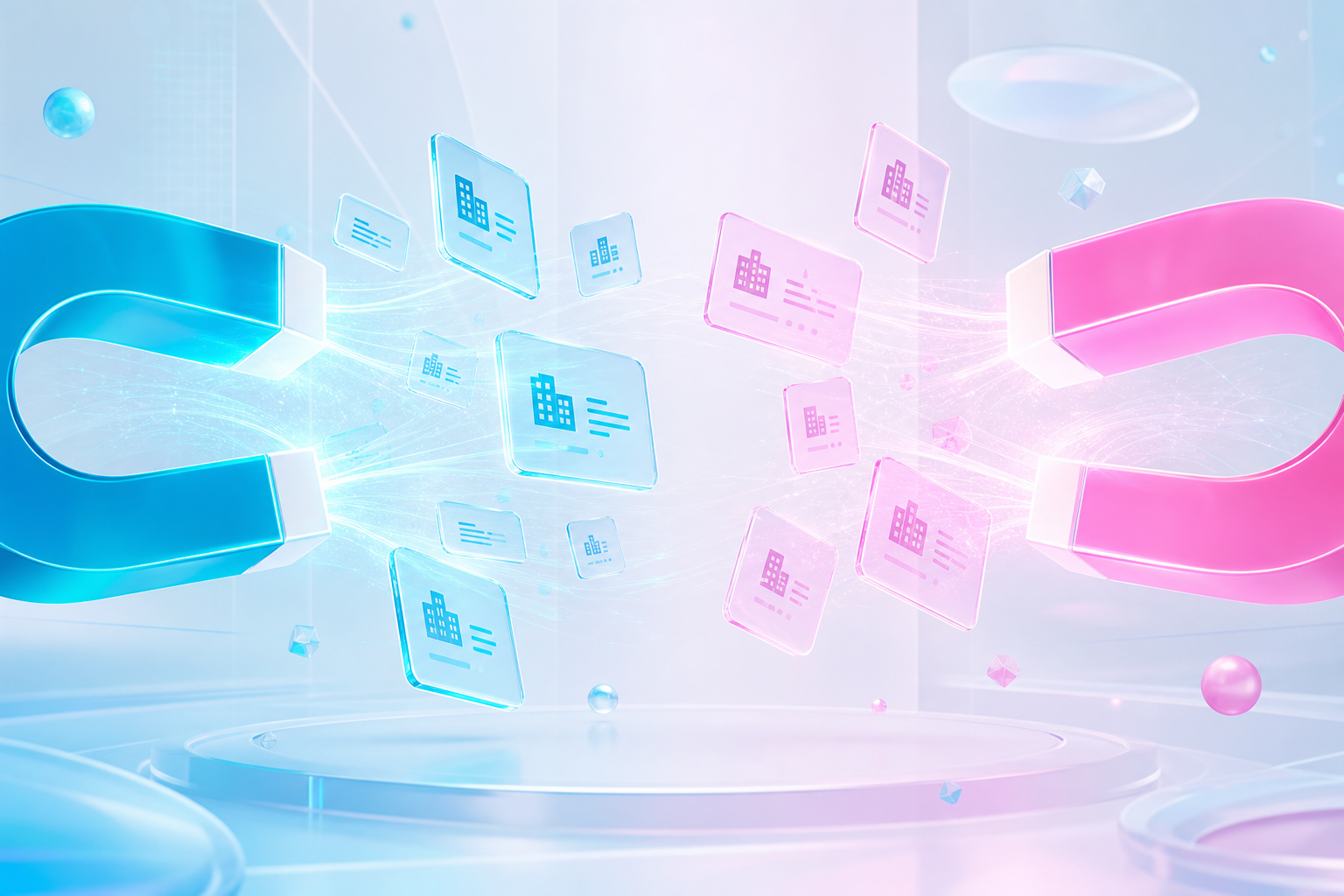
Generative AI market polarization is accelerating in 2026, and it's quietly rewriting the rules for marketers. The launch of Claude Fable, analyzed by Fred Cavazza in his June 2026 breakdown, reveals a strategic shift: AI vendors aren't just chasing raw performance, they're locking in usage. For growth, e-commerce, and performance teams, this generative AI market polarization forces a rethink of the stack, vendor dependency, and ROAS resilience. Here's what's actually changing and three plays you can run now.
Understanding generative AI market polarization
Over the past eighteen months, the generative AI landscape has consolidated sharply. Four blocs dominate: OpenAI (GPT-5 and its agentic suite), Google DeepMind (Gemini 3 Pro and Gemini Nano), Anthropic (Claude 4.5 Sonnet and the new Claude Fable line), and Meta (Llama 4 multimodal, open weights). Each runs a different retention play: native bundling inside a productivity suite, aggressive per-token pricing, priority access to vertical agents, or open-source community lock-in.
Fred Cavazza puts it bluntly: "The release of Claude Fable should have been a celebration moment for the tech ecosystem. Instead, it illustrates" a lock-in logic. For marketers, picking a model is no longer just about output quality — it's a bet on a vendor's commercial roadmap. According to Statista – Digital Advertising, the share of ad budgets spent on generative AI tooling will reach 19% by end of 2026, up from 4% in 2023.
Why this polarization matters for AI-driven marketers
Generative AI market polarization creates three downstream effects on the marketing function. First, the marginal cost of an AI creative drops, but total cost of ownership (license, agents, fine-tuning) goes up. Second, prompt and workflow portability degrades: each vendor pushes its own agent format, ad connectors, and memory logic. Third, first-party data becomes the only real moat, because every competitor can now access the same base models.
The most mature growth teams have already priced this in. It's the same structural decision we break down in our piece on cutting CPA with AI, where over-reliance on a single creative model can blow up unit economics in weeks.

Three concrete implications for growth and e-commerce teams
First implication: budget. Vendors are rolling out retention tiers — non-refundable annual credits, exclusivity-based rebates, agentic access gated to Enterprise plans. Marketers need to bake these clauses into 2026 negotiations or watch AI line items balloon at renewal.
Second implication: creative. Each model develops its own visual and textual signature. Gemini 3 Pro leads on short-form synced video for TikTok, GPT-5 dominates long-form copy and product reasoning, Claude Fable wins on premium brand voice. Practically, your Meta Ads visuals and TikTok hooks can't be produced from one model anymore if you want peak ROAS — you have to route each task to the model that owns it. That's exactly the approach we detail in our 2026 guide to AI-generated Meta Ads creatives.
Third implication: org design. A new "AI ops marketing" role is emerging, tasked with orchestrating models, tracking unit costs, and arbitrating between vendors. Per McKinsey – Growth, Marketing & Sales, companies actively managing an AI model portfolio post 1.9x higher marketing ROI than single-vendor peers.
Vendor matchup: which AI model for which marketing job in 2026
To cut through the noise of generative AI market polarization, here's a quick matchup of current strengths, calibrated for advertising and e-commerce use cases.
| Marketing job | Best model | Why it wins |
|---|---|---|
| TikTok / Reels hooks | Gemini 3 Pro + Veo 3 | Native audio-video sync |
| Long-form SEO copy | GPT-5 | Reasoning and structure |
| Premium brand voice | Claude Fable | Fine editorial nuance |
| Meta Ads at scale | Nano Banana 2 / Imagen 4 | Brand kit consistency |
| Performance Max agents | Gemini 3 + Google Ads | Native integration |
| On-site e-com personalization | Llama 4 self-hosted | Data and cost control |

The hidden risks of AI vendor lock-in
Vendor retention strategies are not neutral. They introduce three risks marketers still underestimate. Risk one: price drift post-acquisition. Multiple vendors have already raised Enterprise pricing 20 to 40% in 2026 once they captured a customer base. Risk two: asset portability loss. When your brand kit, prompts, and agents live inside a proprietary studio, exiting costs quarters of productivity. Risk three, more subtle: creative convergence. If your entire category uses the same model, ad creatives start to look alike, and acquisition cost climbs by default.
To de-risk, double down on what doesn't depend on the vendor: brand identity, workflows, and customer data. A scalable AI brand kit stays usable regardless of which underlying model runs the job — exactly the orchestration logic Market IA enables.
90-day action plan against AI polarization
Faced with generative AI market polarization, here's an operational roadmap for the next 90 days.
- 1Dependency audit: map every marketing AI workflow, the model behind it, monthly cost, and the share of revenue it influences.
- 2Creative multi-sourcing: route at least two competing models on critical jobs (hooks, visuals, copy). Track CTR and CPA delta over four weeks.
- 3Prompt standardization: store prompts in a neutral repo (markdown plus variables), not in proprietary editors.
- 4Contract renegotiation: demand portability clauses, history export, and an annual price cap below 15%.
- 5Internal upskilling: appoint an AI ops marketing lead who reviews the model portfolio every quarter.
This discipline brings marketing closer to industrial operations: you no longer pick tools by comfort, you build a resilient portfolio. For more on scaling creative production, our 2026 TikTok guide shows how to combine multiple AI models without breaking editorial consistency.
FAQ — generative AI market polarization
What is generative AI market polarization? +
Should marketers commit to a single AI model in 2026? +
How do you avoid AI vendor lock-in? +
What's the impact on advertising ROAS? +
Conclusion: turning AI polarization into a competitive edge
Generative AI market polarization is neither an accident nor a passing phase — it's the new market structure. For marketers, the game is no longer about finding the best model, but about orchestrating multiple vendors while preserving creative asset portability. Teams that adopt a portfolio mindset now, supported by an orchestration platform like Market IA, will widen the gap on CPA and ROAS across the 2026 campaign cycle.
Écrit par
Équipe Market IA
L'équipe Market IA vous accompagne dans la création de publicités performantes grâce à l'intelligence artificielle.
Prêt à créer des publicités qui convertissent ?
Rejoignez +2000 e-commerçants qui utilisent Market IA pour créer leurs visuels publicitaires.