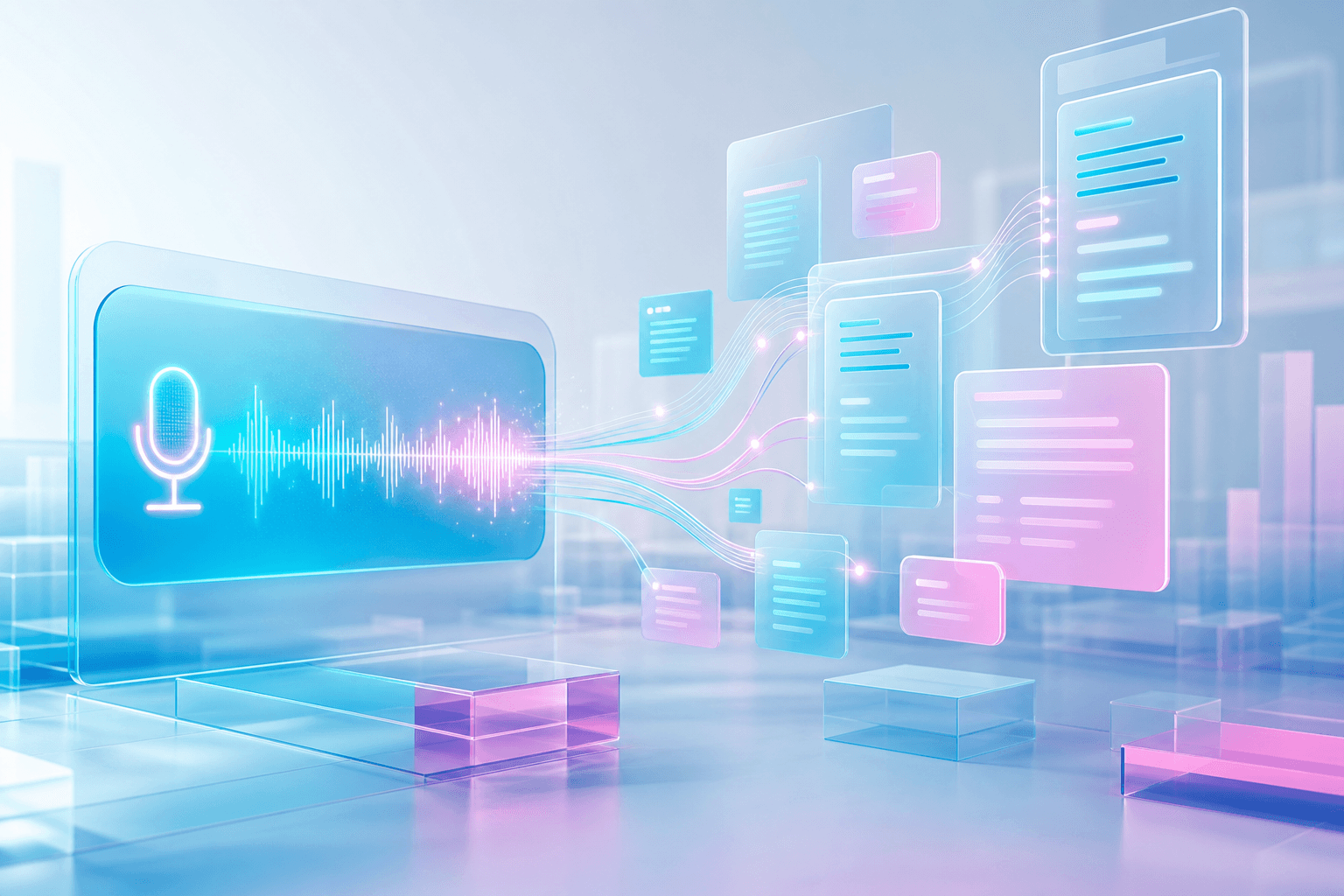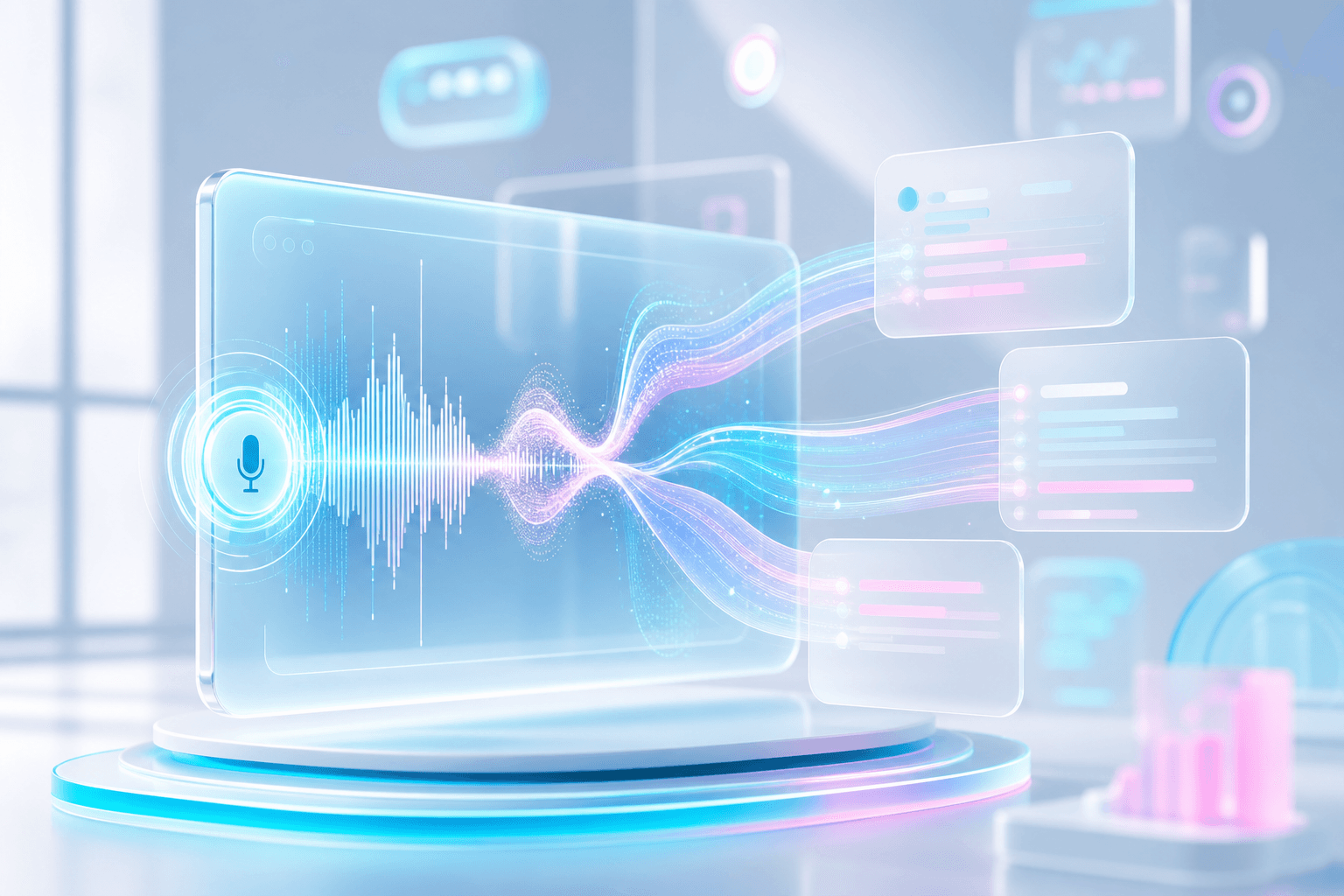
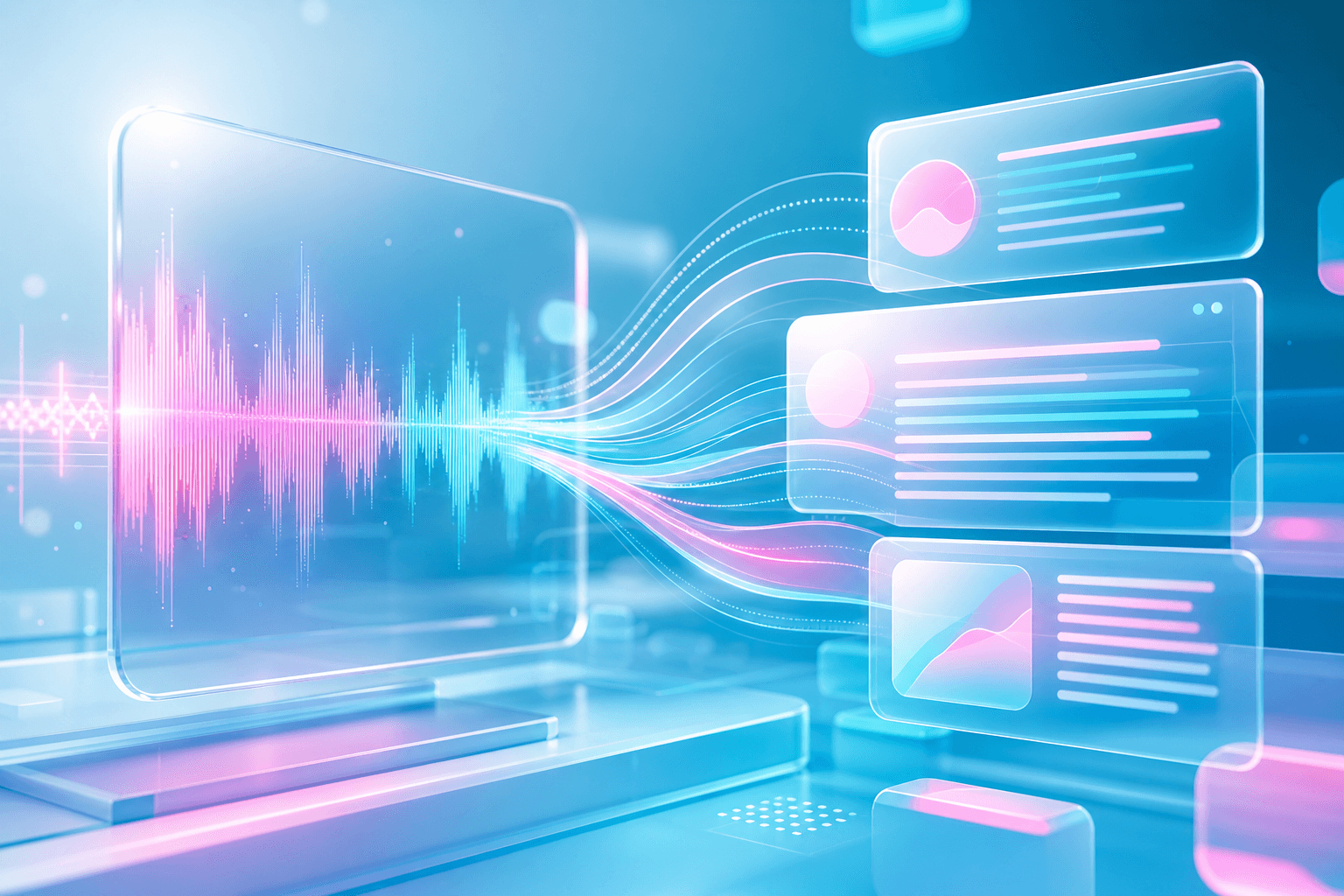
In 2026, audio to text transcription is no longer a journalist's tool — it's a core layer of every modern marketing content engine. Between podcast booms, endless Zoom calls, TikTok lives and B2B webinars, every brand now produces hours of audio per week. AI-powered audio to text transcription turns that raw firehose into SEO articles, social posts, ad scripts and customer insights. This guide gives you the method, the tools and the workflows to turn audio into a growth lever, in line with what we cover in our AI tools for enterprise analysis.
Why Audio to Text Transcription Became a Strategic Asset
Audio is the fastest-growing format between 2023 and 2026. Data compiled by Statista on digital advertising shows that audio and video formats now drive over 58% of global digital media budgets. The catch: an audio file is invisible to Google, unsearchable in meetings, and unusable by an LLM unless it's converted.
Audio to text transcription fixes three structural blind spots:
- It makes your content indexable for search engines and AI chatbots (SGE, Perplexity, ChatGPT Search).
- It feeds your internal models: a transcribed client brief becomes living memory for your prompts.
- It multiplies content lifespan: a 45-minute webinar can fuel one pillar article, 8 LinkedIn posts and 12 ad hooks.
How AI Audio to Text Transcription Works in 2026
Modern transcription engines stack three technical layers: an ASR (Automatic Speech Recognition) model trained on millions of multilingual hours, a diarization layer that separates speakers, and a post-processing LLM that fixes punctuation, acronyms and domain jargon.
In 2026, three families dominate the market:
- Proprietary multimodal models: Gemini 2.5 Pro Audio, GPT-5 Audio and Claude 4.5 Sonnet now ingest native files up to 8 hours long.
- Specialized APIs: OpenAI Whisper v4, AssemblyAI Universal-2, Deepgram Nova-3, tuned for latency and cost.
- Integrated SaaS: Otter, Fireflies, Tactiq, Notta, plugged directly into Zoom, Meet and Teams.
The jump from 2023 is massive: diarization now hits 95% accuracy on noisy phone audio versus 78% three years ago. Models also handle code-switching (jumping from English to Spanish mid-sentence), which used to be a nightmare, as confirmed by benchmarks published on the Google AI Blog.
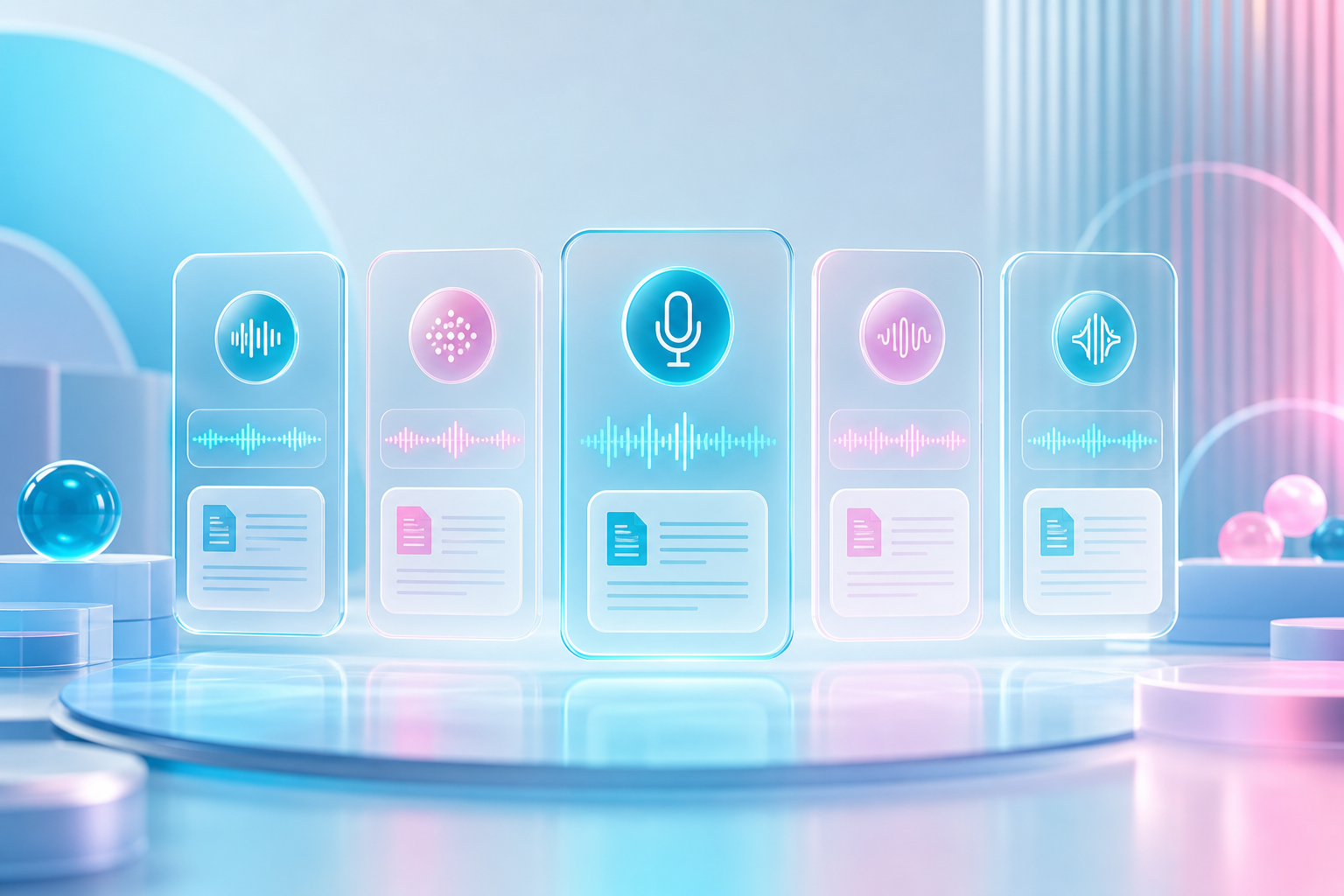
Choosing Your Stack: Audio to Text Transcription Tools Compared
The right tool depends on volume, privacy needs and existing stack. Here's a synthetic comparison of options relevant to a marketing team in 2026.
| Solution | Best for | 2026 pricing |
|---|---|---|
| Whisper v4 API | High volume, custom builds | $0.004 / minute |
| Gemini 2.5 Pro Audio | Advanced semantic analysis | Included in Google AI Pro |
| AssemblyAI Universal-2 | Real-time, multilingual | $0.012 / minute |
| Fireflies / Otter | Meetings, no-code | $19-29 / seat |
| Deepgram Nova-3 | Call centers, low latency | $0.0036 / minute |
| Notta Enterprise | Marketing teams, ease of use | From $16 / month |
For an advanced marketing workflow combining transcription, analysis and creative generation, the moat isn't the raw ASR engine — it's the ability to chain those outputs into your ad stack, which is exactly the logic behind our enterprise AI tools playbook.
Real Marketing Use Cases in 2026
Transcription only matters if it ships a deliverable. These use cases are driving the biggest ROI this year.
- Podcast → SEO repurposing: one episode becomes a 2,500-word pillar article, optimized for long-tail queries with structured FAQ schema.
- Voice of Customer: transcribe your last 20 support calls, run them through an LLM to extract objections, verbatims and ad angles.
- UGC ad scripts: isolate the highest-performing hooks from a TikTok live and reuse them in paid campaigns, as detailed in our TikTok 2026 playbook.
- Automatic captions: 85% of social videos are watched without sound — accurate captions are now an SEO and accessibility must.
- Creative briefs: transcribe client calls to feed your image and copy generation prompts directly.
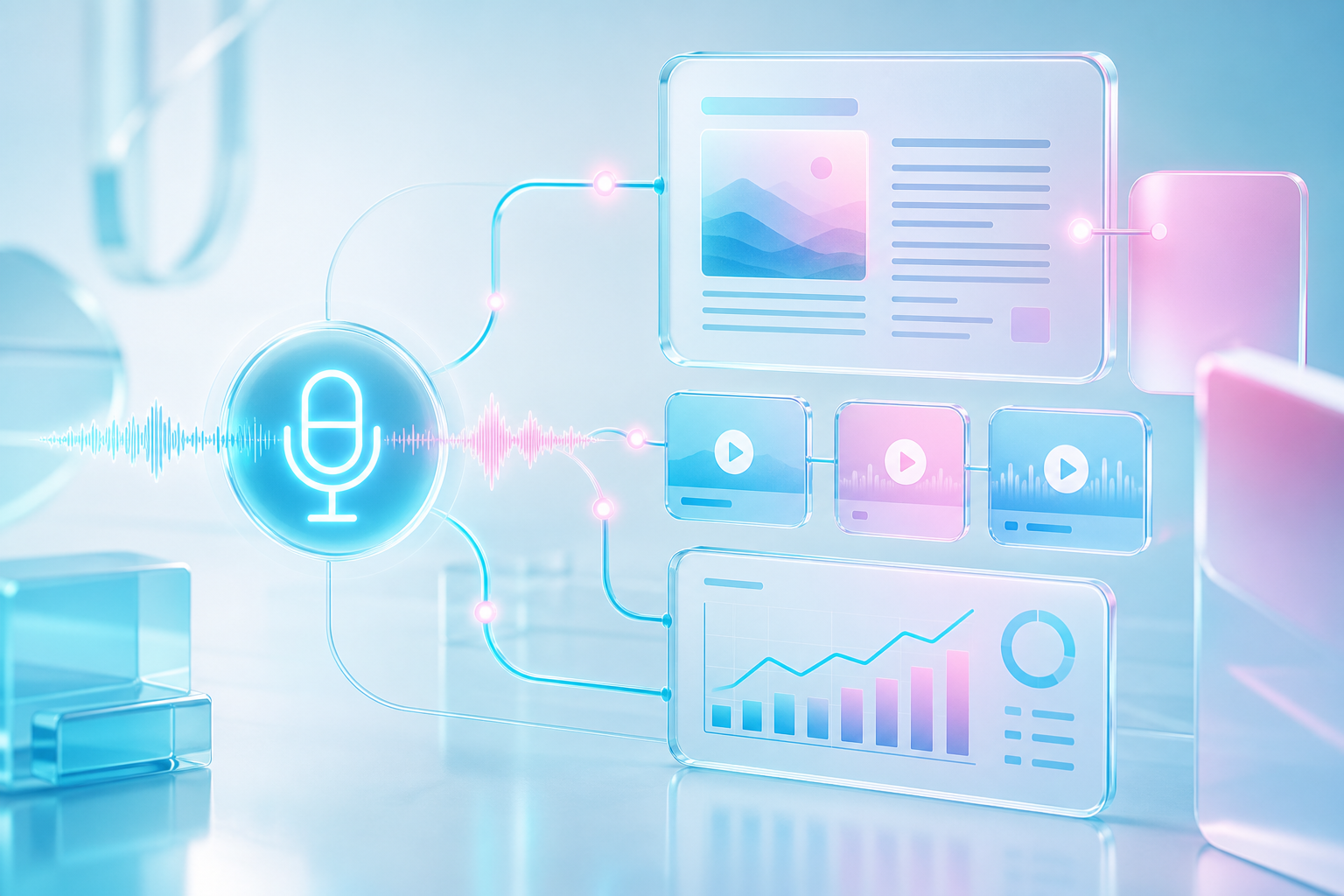
The Workflow: From Audio File to Live Ad Campaign
Here's a battle-tested workflow you can deploy by Monday morning:
- 1Capture: systematically record sales calls, podcasts, lives and webinars (with consent).
- 2Transcribe: send the file to Whisper v4 or Gemini 2.5 Pro Audio via API with diarization on.
- 3Clean: pass the transcript through an LLM with a correction prompt (punctuation, jargon, filler removal).
- 4Extract: ask the model to surface 10 insights, 5 customer verbatims, 3 ad angles and 1 editorial thesis.
- 5Produce: in parallel, generate the SEO article, social posts and ad scripts. For the visual side, plug those angles directly into a platform like Market IA to produce on-brand creatives.
- 6Distribute: ship to blog, paid and organic, measuring lift per channel.
This pipeline ties directly into a broader logic of high-converting AI-generated landing pages, where copy comes straight from customer language rather than creative guesswork.
Pitfalls and Best Practices
Audio to text transcription isn't magic. Several traps sink poorly scoped projects.
- Privacy: if your audio contains customer data, pick an EU-hosted, GDPR-compliant vendor. Avoid freemium tools that reuse your data to train their models.
- Hallucinations: on inaudible segments, models invent. Always proofread critical chunks (numbers, proper nouns, quotes).
- Background noise: pre-cleaning audio (Adobe Enhance Speech, Krisp) boosts accuracy by 15-20 points.
- Multilingual: lock the language in the API parameter — otherwise the model may hesitate on the first segments.
- Volume: above 50 hours per month, switch from SaaS to API. Cost drops 5×.
FAQ: Audio to Text Transcription
What is the best audio to text transcription tool in 2026? +
Is AI transcription GDPR and privacy-compliant? +
How much does audio to text transcription cost at scale? +
How do I use a transcript to boost my Meta or Google Ads? +
Conclusion: Make Audio to Text Transcription a Competitive Edge
In 2026, audio to text transcription is no longer an admin chore — it's the interface between your customer conversations and your marketing machine. Brands that industrialize this flow win on speed, relevance and SEO. Those that ignore it leave their best insights on the cutting room floor. As McKinsey's marketing growth research underlines, companies that exploit conversational data outperform peers by 1.8× on organic growth.
Start small: transcribe your last five customer calls this week and count how many fresh ad angles emerge. It's the cheapest ticket into a marketing strategy driven by the real voice of your customers.
Écrit par
Équipe Market IA
L'équipe Market IA vous accompagne dans la création de publicités performantes grâce à l'intelligence artificielle.
Prêt à créer des publicités qui convertissent ?
Rejoignez +2000 e-commerçants qui utilisent Market IA pour créer leurs visuels publicitaires.