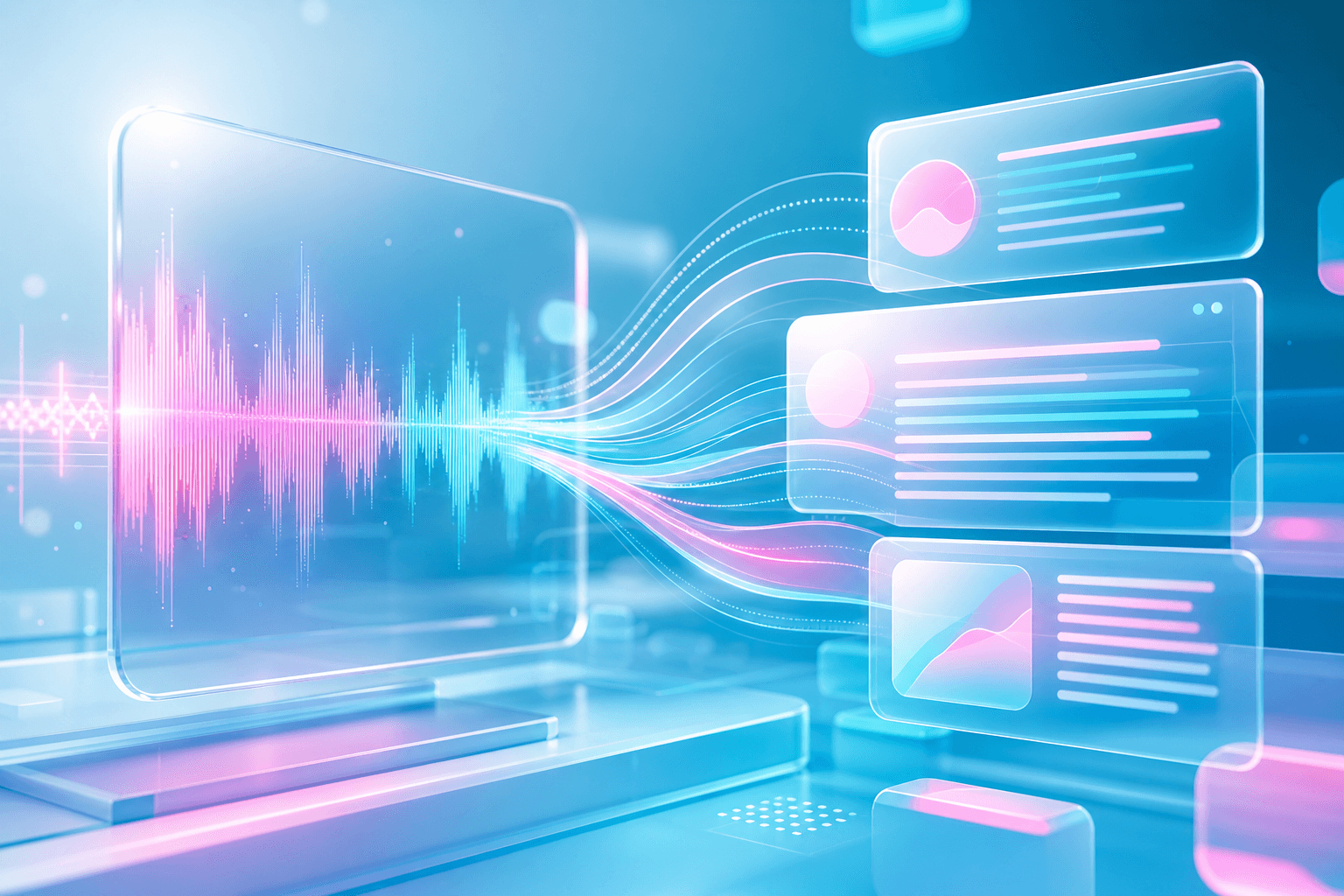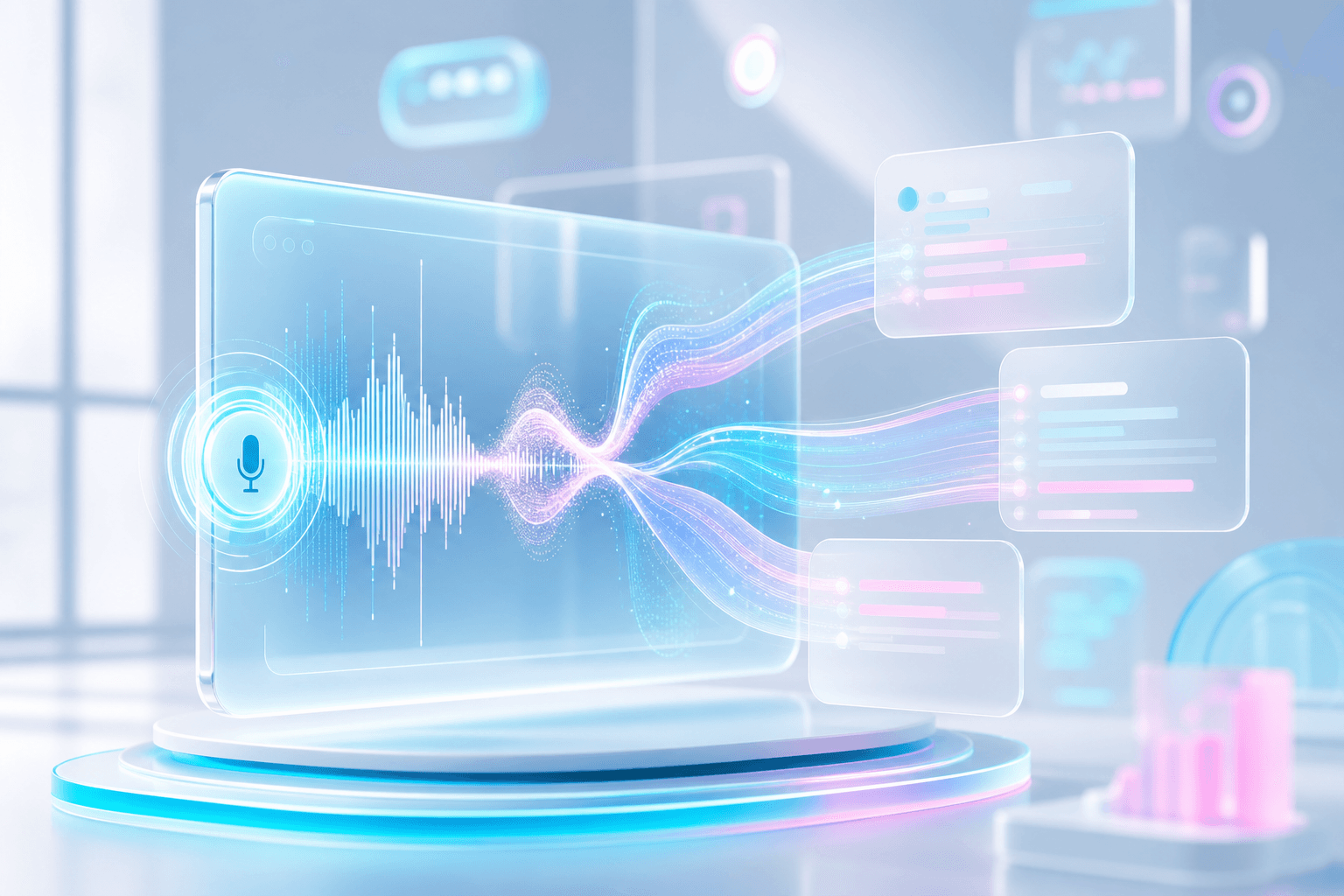
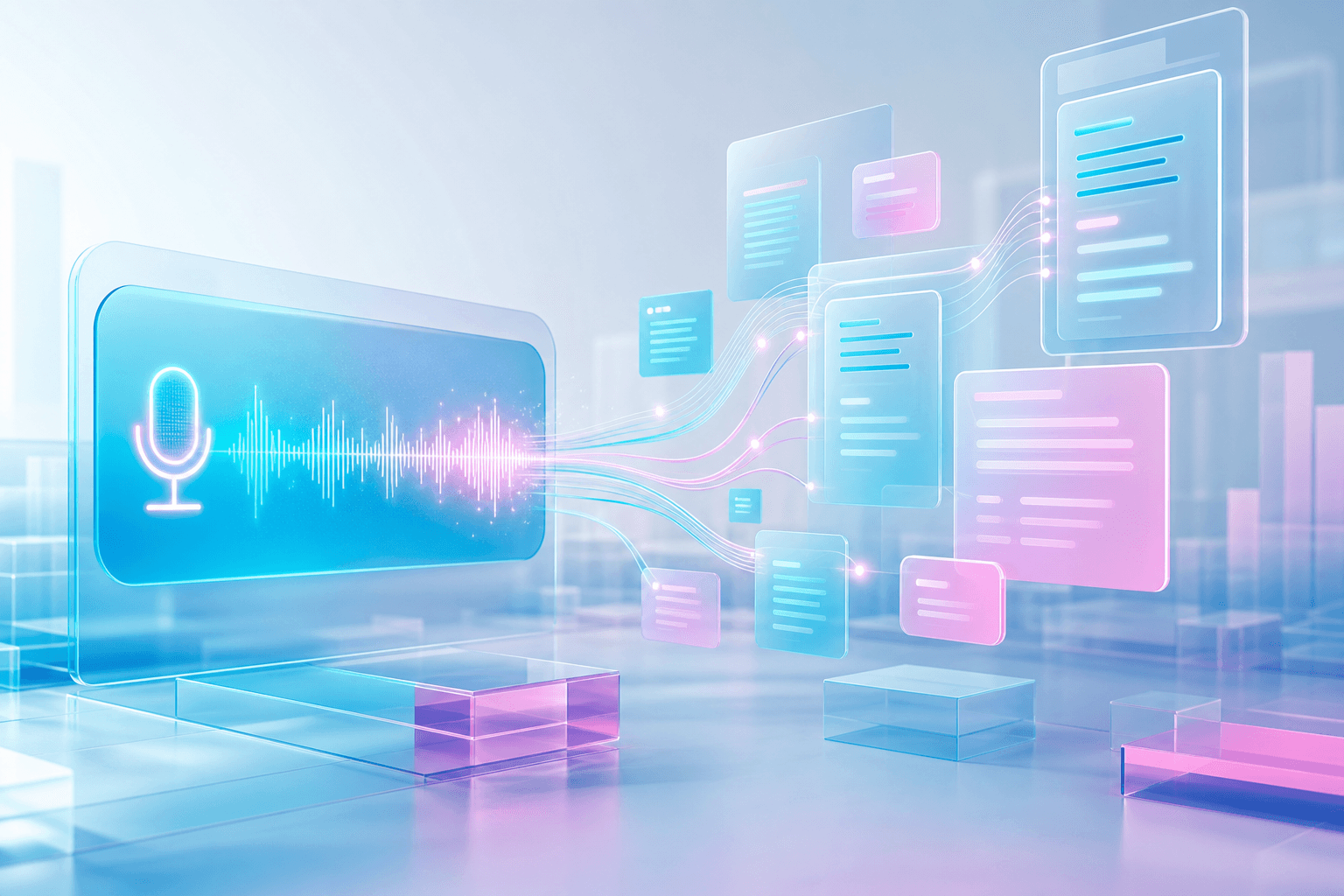
In 2026, audio to text transcription is no longer a productivity nice-to-have — it's a core pillar of content marketing and paid performance. Podcasts, webinars, customer interviews, sales calls, UGC videos, TikTok lives… every minute of captured audio is now actionable data fuelling SEO, social, and acquisition. Recent benchmarks show that 78% of B2B marketing teams now rely on an AI-powered transcription tool in their daily stack, up from just 31% in 2023.
This complete guide breaks down how to leverage audio to text transcription in 2026: the best tools, high-ROI use cases, common pitfalls, and how to plug transcripts into a generative AI content engine.
Why audio to text transcription became a strategic priority in 2026
The explosion of audio and video formats created a paradox: more content than ever is being produced, but most of it stays invisible to search engines and to the LLMs now driving content discovery. Google, Perplexity, ChatGPT Search and Gemini all index structured text first. One untranscribed hour of podcast equals one hour of expertise lost to SEO.
Mature marketing teams plug audio to text transcription into three critical workflows: evergreen content production, voice-of-customer (VoC) analysis, and ad creative optimization. Insights pulled from sales calls feed directly into the hooks used in ad copy, as we explore in our TikTok AI creative best practices breakdown.
Research from McKinsey on growth marketing levers shows that brands exploiting unstructured conversational data deliver a marketing ROI 23% above their industry average.
How AI-powered audio to text transcription actually works
In 2026, transcription engines mostly run on Whisper v4, Gemini 2.5 Audio, and proprietary GPT-5 Voice variants. These models go far beyond raw transcription: they diarize speakers, punctuate intelligently, detect sentiment, translate live, and summarize on the fly.
A modern pipeline typically follows five stages:
- 1Ingestion of the audio file or live stream (up to 8 hours without manual chunking).
- 2Noise reduction and normalization through an audio pre-processing model.
- 3Speech recognition (ASR) via a multimodal LLM with industry context.
- 4Diarization and enrichment (timestamps, sentiment, extracted keywords).
- 5Multi-format export: SRT for subtitles, JSON for analytics, Markdown for editorial.
Best audio to text transcription tools comparison in 2026
The market has consolidated into three families: pure transcribers (Whisper API, AssemblyAI), integrated platforms (Otter, Fireflies, Descript), and native LLM modules (Gemini Live, ChatGPT Voice). The right pick depends on volume, GDPR constraints, and existing stack.
| Tool | EN Accuracy | Best for |
|---|---|---|
| Whisper v4 API | 98.1% | High volume, custom pipelines |
| Gemini 2.5 Audio | 98.5% | Multilingual, native summaries |
| AssemblyAI Universal-2 | 97.6% | Sentiment + advanced diarization |
| Descript Studio | 96.9% | Podcast + video editing |
| Otter AI 4.0 | 96.3% | Internal meetings, CRM sync |
| Fireflies Pro | 95.8% | Sales calls, HubSpot integration |
For a broader view of AI marketing tools, check our 2026 comparison of AI creative tools for ads.
High-ROI use cases for marketers
Audio to text transcription only matters by what you do with it. Here are the five use cases delivering the fastest ROI for marketing teams in 2026:
- Repurposing podcasts into long-tail SEO articles, with automatic angle extraction.
- Auto-subtitling social videos (TikTok, Reels, Shorts), since 85% of users watch sound-off.
- VoC analysis of sales and support calls to surface real pains and bake them into ad copy.
- Quick translation and localization of webinars to enter new markets without re-shooting.
- Generating FAQs and ad scripts from authentic customer interviews.
The most powerful play is pairing transcription with creative generation. Once insights are extracted, the best angles can flow straight into AI-generated high-converting landing pages or into the production of ad visuals.
Best practices for pro-grade audio to text transcription
Even with 2026's best models, transcription quality depends as much on the source file as on the tool. Apply these golden rules every time:
- 1Record at 48 kHz / 16-bit minimum, dedicated mic (no laptop mic).
- 2Avoid reverberant rooms: carpet, curtains, and foam dramatically improve signal.
- 3Split speaker tracks when possible — diarization becomes near-perfect.
- 4Feed the AI a context prompt ("B2B SaaS interview about marketing automation") to unlock the right vocabulary.
- 5Always proofread numbers, proper nouns, and acronyms — the only persistent blind spot of audio LLMs.
Embedding transcription in a full AI marketing workflow
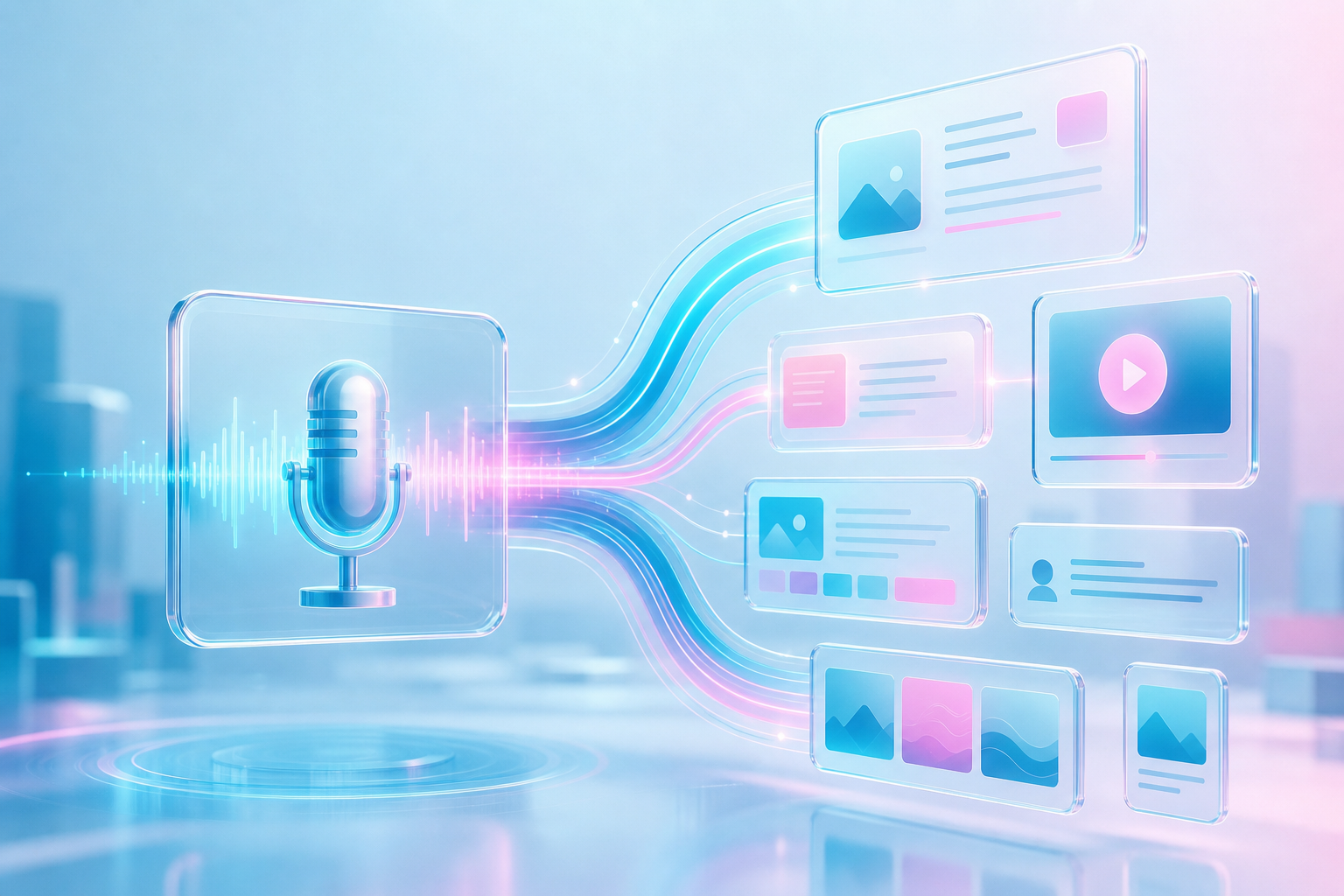
The real 2026 revolution is the end-to-end chain: capture, transcribe, analyze, generate, distribute. The Think with Google report on the future of marketing highlights that 64% of high-performing marketers have automated at least three consecutive content production steps.
A typical workflow: a webinar is captured, transcribed by Gemini 2.5 Audio, insights are extracted by a GPT-5 agent that drafts an editorial brief, and that brief feeds the generation of articles, visuals, and ad scripts. On Meta, this logic plugs naturally into Advantage+ campaigns, as detailed in our breakdown of AI Drives Performance updates.
The payoff is twofold: production velocity multiplied by 5 and stronger message consistency, since every asset stems from a single verified source — the customer's own voice.
FAQ: everything you need to know about audio to text transcription
What is the best free audio to text transcription tool in 2026? +
Is AI audio to text transcription reliable for legal content? +
How do I optimize a transcript for SEO? +
Can I transcribe a TikTok live or webinar in real time? +
Conclusion: turn audio to text transcription into a competitive edge
Audio to text transcription is no longer a technical commodity: in 2026, it's a major marketing lever that turns every conversation, podcast, and webinar into editorial and advertising fuel. Brands that industrialize this flow gain velocity, consistency, and relevance — three critical factors as LLMs increasingly dictate content discovery.
Ready to scale? Discover Market IA, the all-in-one platform connecting transcription, insight extraction, and ad creative generation for ambitious marketers.
Écrit par
Équipe Market IA
L'équipe Market IA vous accompagne dans la création de publicités performantes grâce à l'intelligence artificielle.
Prêt à créer des publicités qui convertissent ?
Rejoignez +2000 e-commerçants qui utilisent Market IA pour créer leurs visuels publicitaires.