In 2026, a product recall is no longer a back-office logistics event: it's a live stress test of your brand resilience. Between the EU Digital Product Passport, viral amplification on TikTok and consumers' uncompromising demand for transparency, handling a product recall now requires a precise blend of legal, supply chain and — above all — AI-driven crisis marketing.
This guide is built for marketers, e-commerce leads and executives who want to turn a regulatory obligation into a trust-building moment. You'll find the full procedure, the AI stack to deploy, 2025-2026 examples and an actionable communication playbook.
What a product recall actually means in 2026
A product recall is the withdrawal from the market of an item that presents a defect, a health risk or a compliance failure, combined with direct outreach to every identifiable buyer. Since the EU General Product Safety Regulation (GPSR) became fully enforceable in December 2024, companies must notify Safety Gate within 72 hours and contact each known purchaser.
The 2026 shift comes from three converging forces: the Digital Product Passport making every SKU traceable, marketplaces being legally required to relay recalls, and AI tools mature enough to orchestrate omnichannel responses in hours. According to Statista – Digital Advertising, brands that invest in data-driven crisis comms recover their social engagement in 6 weeks versus 4 months for laggards.
2026 legal framework every marketer must know
In the EU, national authorities such as the French DGCCRF feed Safety Gate automatically. The CPSC handles US recalls with Section 15(b) Reporting, where penalties can reach 120,000 dollars per violation. Core obligations in 2026:
- Notify regulators within 72 hours of identifying a serious risk.
- Publish a clear recall notice (photo, batch, serial, root cause, corrective action).
- Directly reach out to identifiable buyers via every available channel.
- Display the recall notice in stores and on the product page for at least two months.
- Document every action in an auditable log.
Research from Harvard Business Review – Marketing shows that a notification failure multiplies the total cost of a recall by 2.3.
7 operational steps of a controlled product recall
Here's the playbook we recommend to marketing and CX teams:
- 1Detection: weak signals via customer service, Trustpilot reviews, social posts, IoT sensors.
- 2Risk qualification: severity x probability matrix, decision within 24 hours.
- 3Regulatory notification: Safety Gate, RappelConso, CPSC depending on markets.
- 4Buyer identification: CRM, marketplace data, loyalty program reconciliation.
- 5Omnichannel communication: email, SMS, push, social, media, retail.
- 6Return logistics: prepaid labels, refund, replacement, tracking.
- 7Post-mortem and win-back plan: root cause, product fixes, recovery campaigns.
Step 4 has become mission-critical. With purchase channels fragmenting, identifying 90% of buyers requires an AI identity-resolution layer. Our deep dive on Google's AI attribution model explains how those identity architectures now power crisis management too.
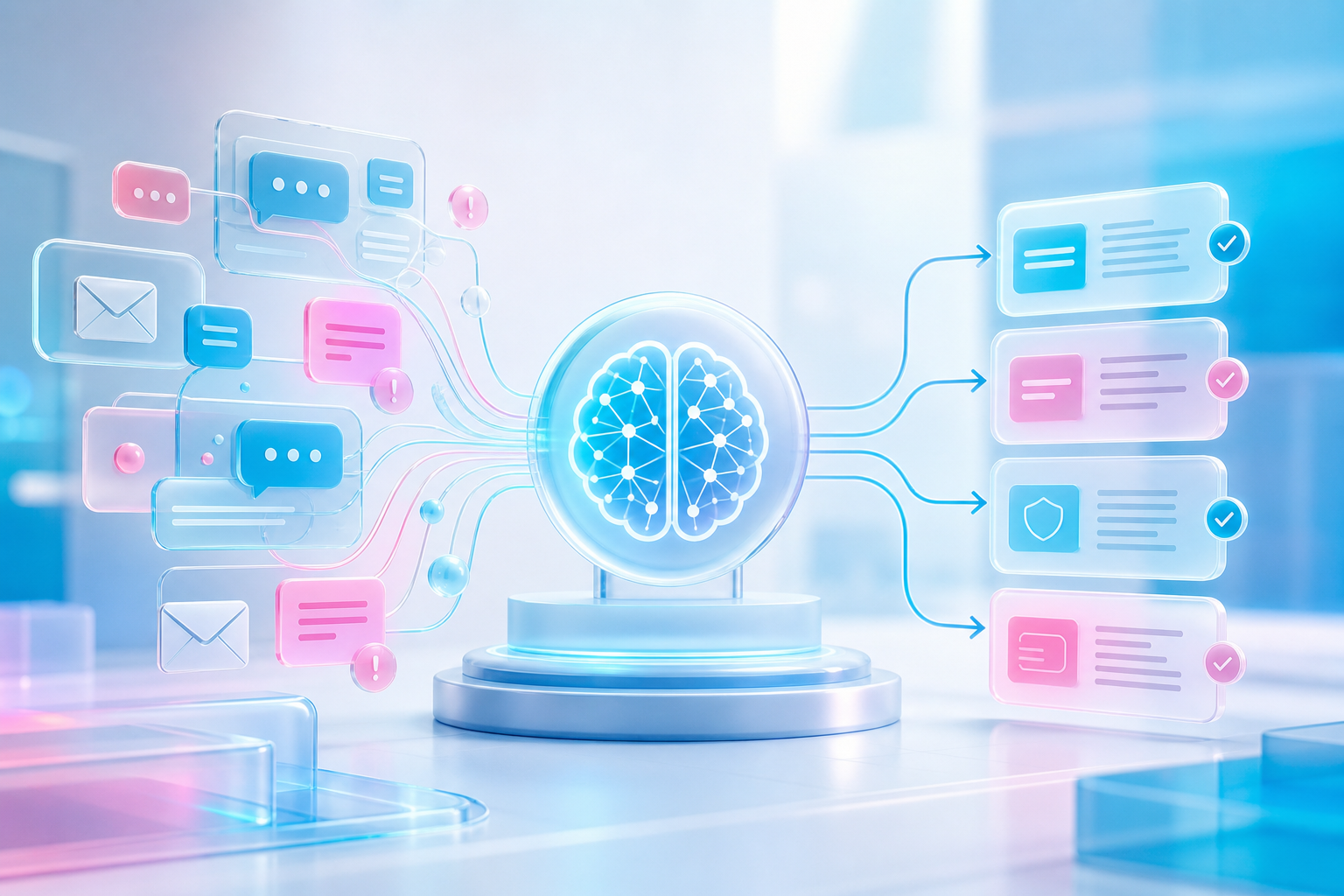
Crisis communication: the 2026 AI playbook
Product recall communication no longer looks like a cold press release sent at 5pm. In 2026, marketers orchestrate segment-personalized responses, generated and adapted in real time by models like Gemini 2.5 Pro or Claude 4.5. The proven structure:
- Empathy first, legal second: acknowledge, apologize, explain the immediate action.
- Consistent visuals across channels: lean on your brand system to reassure rather than alarm.
- Segment personalization: a VIP customer doesn't get the same message as a one-time buyer.
- Proactive follow-up: D+3, D+10, D+30 nudges until the return is confirmed.
To produce dozens of visual and textual variations without burning out your creative team, the AI brand kit approach for visual identity at scale has become a must-have. It industrializes pre-approved crisis assets you can deploy in minutes.
Comparison: manual vs AI-augmented recall management
| Criterion | Manual | AI-augmented |
|---|---|---|
| Notification time | 48-72 hours | 4-8 hours |
| Buyer reach rate | 45-60% | 85-95% |
| Creative variations produced | 3 to 5 | 30 to 100+ |
| Social sentiment monitoring | Weekly sampling | Real-time multilingual |
| Total average cost | $1.3M to $3.7M | $500K to $1M |
| 90-day NPS recovery | -18 points | -4 points |
Research from McKinsey – Growth, Marketing & Sales confirms that brands industrializing their crisis stack with AI cut total recall cost by 60% and preserve 80% of their brand value at 12 months.

Post-recall win-back: turning crisis into a trust lever
A well-managed product recall can, counter-intuitively, increase loyalty. Customers who experience a transparent, frictionless recall often become your best ambassadors. Three levers to pull within 30 to 90 days:
- Reassurance campaign: storytelling on the fixes, behind-the-scenes video, reinforced certification.
- Boosted loyalty program: a differentiated gesture for impacted buyers.
- Targeted paid win-back: dedicated creatives on Meta Advantage+ and Performance Max, narrowly targeted.
This is exactly where on-demand creative production pays off. Our guide on high-converting landing pages with generative AI details how to build a reassurance page in hours that turns post-incident curiosity into repeat purchase.
AI tools and recommended tech stack
The building blocks of a modern 2026 product recall setup:
- Real-time social listening: Brandwatch, Talkwalker, or Gemini 3 native solutions.
- Unified CDP with identity resolution: Segment, RudderStack, mParticle.
- AI creative generation: Market IA for ad visuals, Nano Banana 2 or GPT-Image 2 for editorial assets.
- Omnichannel orchestration: Braze, Iterable, Klaviyo with pre-wired scenarios.
- Virtual war room: Claude 4.5 or Gemini 2.5 Pro agents triaging inbound messages.
For a deeper dive into the stack, see our analysis of enterprise AI tools for 2026, with mature architectures observed across European DTC and retail brands.
What is the legal deadline to notify a product recall in 2026? +
How much does a product recall typically cost? +
Can AI fully manage a product recall on its own? +
Should we go public even if only a few units are affected? +
Conclusion: make product recall a strategic asset
In 2026, a product recall is no longer something you endure — it's something you orchestrate. Marketers who set up a clear playbook, a mature AI stack and a pre-approved Recall Kit gain a decisive edge over competitors. The difference between a crisis that destroys a brand and one that strengthens it comes down to a few hours of reactivity and the quality of the preparation. To industrialize your crisis and win-back creative production, Market IA gives you the leverage to generate dozens of segment-tailored visuals, banners and landings in minutes — exactly what you need to turn a product recall into proof of your reliability.
Écrit par
Équipe Market IA
L'équipe Market IA vous accompagne dans la création de publicités performantes grâce à l'intelligence artificielle.
Prêt à créer des publicités qui convertissent ?
Rejoignez +2000 e-commerçants qui utilisent Market IA pour créer leurs visuels publicitaires.