In April 2026, managing a product recall is no longer a simple logistical procedure. It's a real-time stress test for your reputation, your marketing agility, and your technological mastery. Forget dusty press releases and overwhelmed call centers. Today, a recall is managed at the speed of AI, under the relentless scrutiny of social media and in the face of constant informational noise. This guide is designed for you, marketers, to transform this potentially devastating crisis into a demonstration of strength and transparency, using the most advanced tools at our disposal, from Gemini 2.5 Pro to GPT-5.
Why Product Recall Management Became an AI Challenge in 2026
In the past, the main challenge was reaching affected consumers. In 2026, the challenge is to control the narrative in a fragmented, AI-supercharged media ecosystem. The speed at which information—both true and false—spreads has exploded. Effective crisis management is no longer measured in days, but in hours, even minutes.
Tools like Google Performance Max's AI agents or Meta Advantage+'s creative suites are no longer just for growth, but also for protection. They allow you to segment affected audiences with surgical precision, generate apology or informational creatives in seconds, and monitor sentiment in real-time. A recent study from Statista on Digital Advertising highlights that companies integrating AI into their crisis plans reduce the financial impact of a recall by nearly 30%.
Phase 1: Preparation, Your Brand's Invisible Shield
The best product recall is one you've prepared for. Anticipation is key, and it's built long before the first warning sign appears.
- Proactive Monitoring: Set up AI alerts (via tools like Brandwatch or custom Gemini agents) to continuously scan for mentions of your products associated with negative terms. Monitoring must be as constant as watching
gold pricesfor a trader. - Risk Mapping: Identify your most sensitive products and pre-draft communication templates. With tools like Claude 4.x, you can generate dozens of variations (tone, channel, audience) and store them in a crisis content bank.
- Audience Segmentation: Prepare custom audiences in your ad platforms (Meta, Google, TikTok) for customers who purchased the potentially faulty product. On D-day, you'll just need to activate the campaign.
Phase 2: Announcing the Product Recall – Communicating with Precision and Empathy
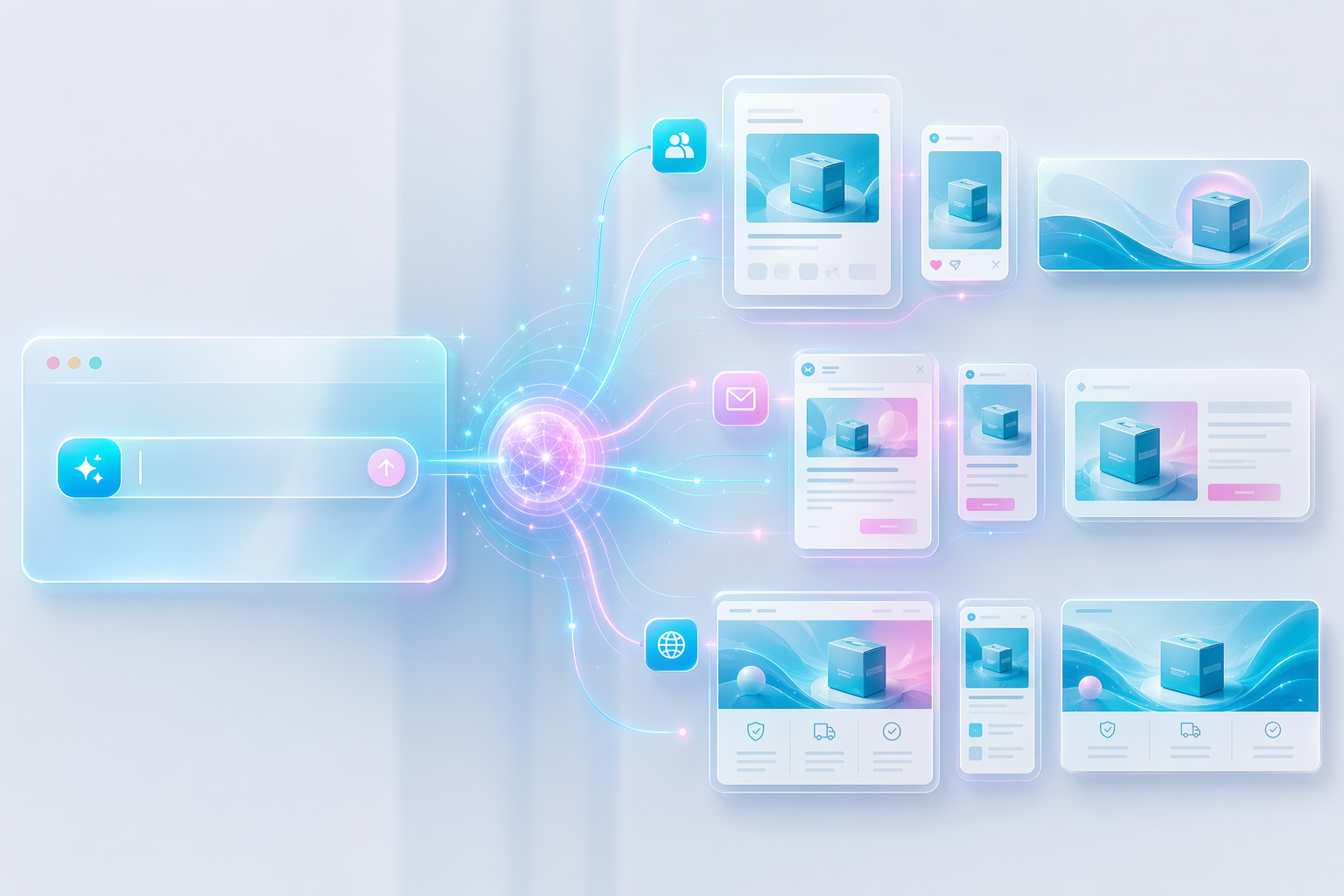
The moment of the announcement is critical. Your first message will set the tone for the entire crisis. The goal is twofold: inform clearly and show empathy. Generative AI is a powerful ally here to avoid suffering from creative fatigue even in times of crisis.
Adopting the right point of view is essential: the customer's. What do they need to know? How can you reassure them? Transparency isn't an option; it's the only way forward. A message that seems to hide information, even with a slight touch of malice in its marketing spin, will be immediately punished by the public.
| Communication Channel | Traditional Approach (2022) | AI-Augmented Approach (2026) |
|---|---|---|
| Mass email to the entire database. | AI-personalized emails (Gemini 2.5 model) to purchasers only, with a direct link to the procedure. | |
| Social Media | Single organic post on the main page. | Targeted campaign (Meta Advantage+) with video creatives from TikTok Symphony explaining the steps. |
| Website | Banner on the homepage. | Activation of the dedicated "dark site," with a chatbot (powered by Claude 4.x) to answer questions 24/7. |
| Press Relations | Standard press release sent to agencies. | Dynamic press kit with an AI-generated CEO video FAQ and real-time data visualizations. |
Phase 3: Omnichannel Deployment and Noise Management
Your announcement is out. Now, you must amplify the message and, crucially, manage the reactions. This is where the informational chaos of 2026 comes into play. While you're communicating about something as serious as a product recall, part of your audience is searching for information about their driver's license, next year's advent calendar, or worried about their social housing application.
Your communication must be so clear and well-targeted that it cuts through this background noise. Use social listening tools to identify misinformation hotspots and respond directly with hyper-targeted ad campaigns on Google Ads or Meta. The goal isn't to silence critics, but to ensure that official, correct information is always more visible.

Phase 4: The Aftermath – Rebuilding Trust and Measuring Impact
A product recall doesn't end when the last product is returned. The rebuilding phase is just as crucial. It's the time to prove that you've learned your lesson and that you're a responsible brand.
- 1Analyze the Data: Use sentiment analysis tools to measure how your brand perception evolved before, during, and after the crisis. What was the impact on your overall
CTRandROAS? Platforms like Market IA integrate dashboards to track these KPIs. This will help you better understand how to optimize your ROAS with AI even in turbulent times. - 2Communicate Lessons Learned: Publish a transparency report. Explain the cause of the problem and the measures put in place to prevent it from happening again. This is a bold move that turns a weakness into a strength.
- 3Launch Recovery Campaigns: Once the dust has settled, launch special offers or loyalty programs for affected customers. It's an investment in winning back their trust, which can be more valuable than a new customer.
Sometimes, a product recall is like an obituary for a product line. This is an opportunity to communicate about innovation and the future, showing that the company is moving forward.
FAQ: Handling Unexpected Queries During a Product Recall
How should we handle our brand being associated with queries like "Premier League table"? +
What if our support channels are flooded with questions about "housekeeping services" or other unrelated topics? +
In conclusion, managing a product recall in 2026 is a high-stakes marketing exercise. It demands meticulous preparation, swift and empathetic execution, and the intelligent use of AI technologies. Successful brands don't just limit the damage; they use this ordeal as an opportunity to strengthen trust and demonstrate their commitment to their customers. To create powerful visuals even under pressure, it's essential to master prompting techniques for models like GPT-Image 2.
With a well-oiled strategy and the right tools, a product recall can become the chapter in your brand's story that proves, more than any other, that you put your customers above all else. That's where true brand equity is built.
Écrit par
Équipe Market IA
L'équipe Market IA vous accompagne dans la création de publicités performantes grâce à l'intelligence artificielle.
Prêt à créer des publicités qui convertissent ?
Rejoignez +2000 e-commerçants qui utilisent Market IA pour créer leurs visuels publicitaires.