In 2026, the start page is no longer just a homepage: it's the strategic entry point that decides whether a visitor stays, scrolls or bounces in under three seconds. With conversational search exploding through Gemini 3 Pro, GPT-5 and Claude 4.5, your first impression now plays out on Google and inside AI-generated answers. This guide walks you through designing, optimizing and scaling a high-performing start page that combines SEO, UX and generative AI.
What exactly is a start page?
The term start page covers several realities depending on context. It can describe the main homepage of a website (the root domain), a campaign-specific landing page, or even the default page configured in a browser or a SaaS tool at first login. From a 2026 marketing standpoint, we mostly mean the first screen a user sees after clicking on an ad, an organic result or an AI recommendation.
The nuance matters: a start page isn't necessarily the / URL of your site. For an e-commerce brand, it could be a seasonal collection. For a SaaS, a personalized onboarding flow. For a publisher, the latest article. The goal: aligning that first touchpoint with the visitor's exact intent.
Why the start page became the battleground in 2026
Two shifts pushed the start page to the top of the marketing priority list. First, Google AI Overviews and Perplexity Shopping now cite specific pages in response to user queries, requiring those pages to deliver instant, contextual answers. Second, AI-driven campaigns — Meta Ads Business, Google Performance Max with AI agents, TikTok for Business Symphony — push hyper-segmented audiences to the same URL. If the page can't adapt, ad spend evaporates.
According to a McKinsey study released in early 2026, brands that dynamically personalize their entry page generate 38% higher revenue per visitor compared to those serving a single static message. This is no longer reserved for e-commerce giants: no-code tools and generative AI have democratized the practice.
Anatomy of a start page that converts
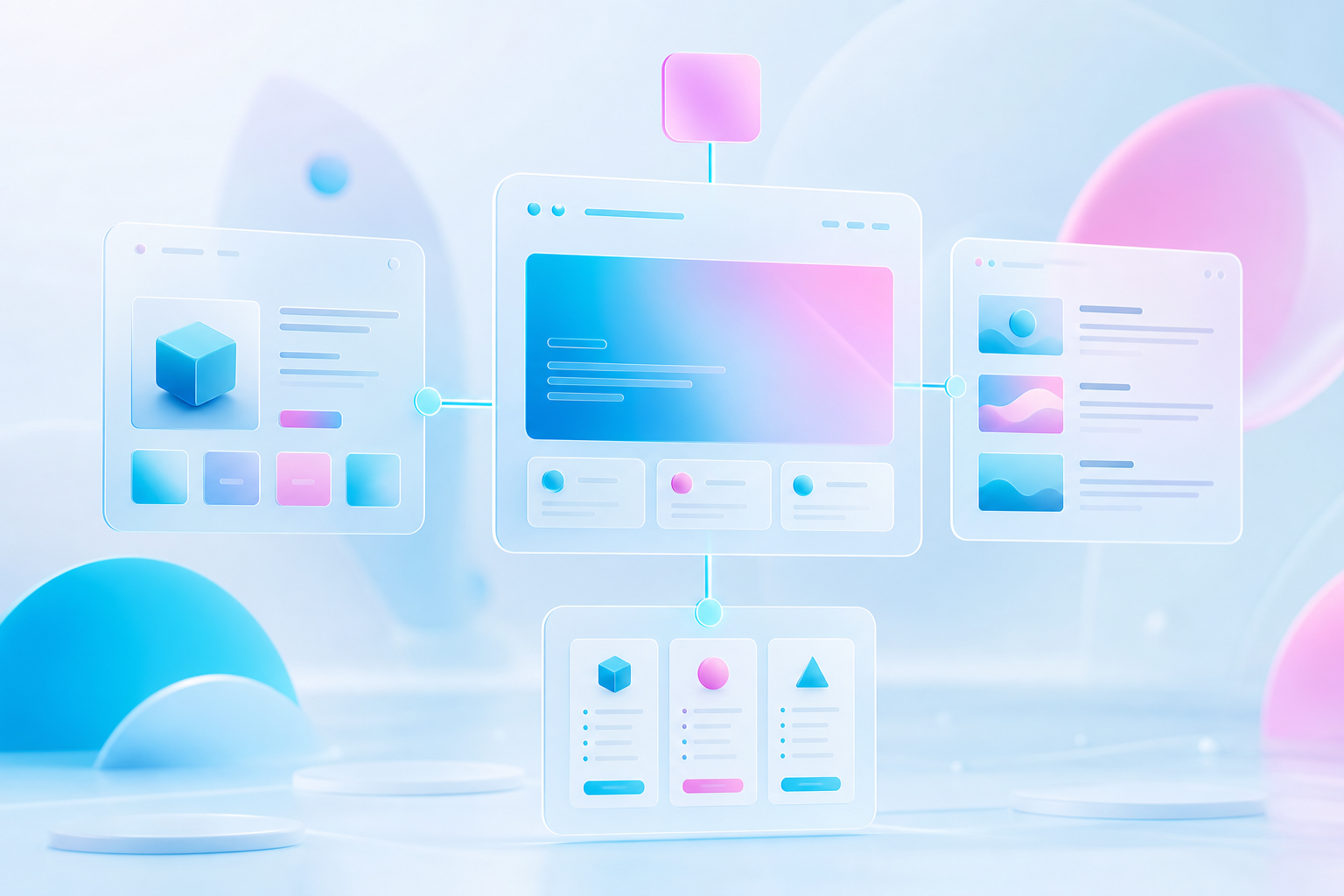
A winning start page in 2026 follows a proven architecture validated by thousands of A/B tests. Here are the must-have blocks:
- A crystal-clear hero in under 8 words that answers « what's in it for me? »
- Immediate social proof (client logos, average rating, user count)
- A primary CTA above the fold, high-contrast and action-oriented
- A visual product demo (6-second loop video, animated screenshots or AI-generated visuals)
- Three key benefits written in customer language, not internal jargon
- An objection-killer section (short FAQ, guarantee, data-backed testimonials)
- A second CTA after the proof, more engaging
Order matters. Eye-tracking and heatmap studies show that 79% of visitors never scroll past the second screen. Anything below the first 1,200 pixels should be considered a bonus.
| Start page type | Main goal | Key KPI |
|---|---|---|
| Corporate homepage | Credibility and navigation | Click-through to offer |
| Meta/TikTok ad landing | Immediate conversion | CVR, CPA, ROAS |
| SEO product page | Long-tail capture | Organic traffic, scroll |
| SaaS onboarding | Fast activation | Time-to-value, D7 retention |
| AI Overview start page | Instant answer | AI answer visibility |
Optimizing your start page for SEO and AI engines
Classic SEO is still essential, but now layered with a new dimension: GEO (Generative Engine Optimization). Practically, your start page must be readable both by humans and large language models. That means clean semantic structure (one H1, thematic H2s, Schema.org structured data), sub-1.5s load on mobile and, most importantly, direct answers in the opening paragraphs.
Resources like Think with Google confirm that pages cited in AI Overviews share three traits: they answer the question in the very first sentence, they cite authority sources, and they structure information in scannable blocks (lists, tables, FAQ). To go further on the creative side, our deep dive into AI-generated Meta Ads visuals explains how to align image and message right from the hero of your start page.
Don't forget internal linking either: your start page is the central node distributing authority to category, product and blog pages. A lack of outbound links from this page is one of the most common SEO mistakes in 2026.
AI personalization: the new start page standard
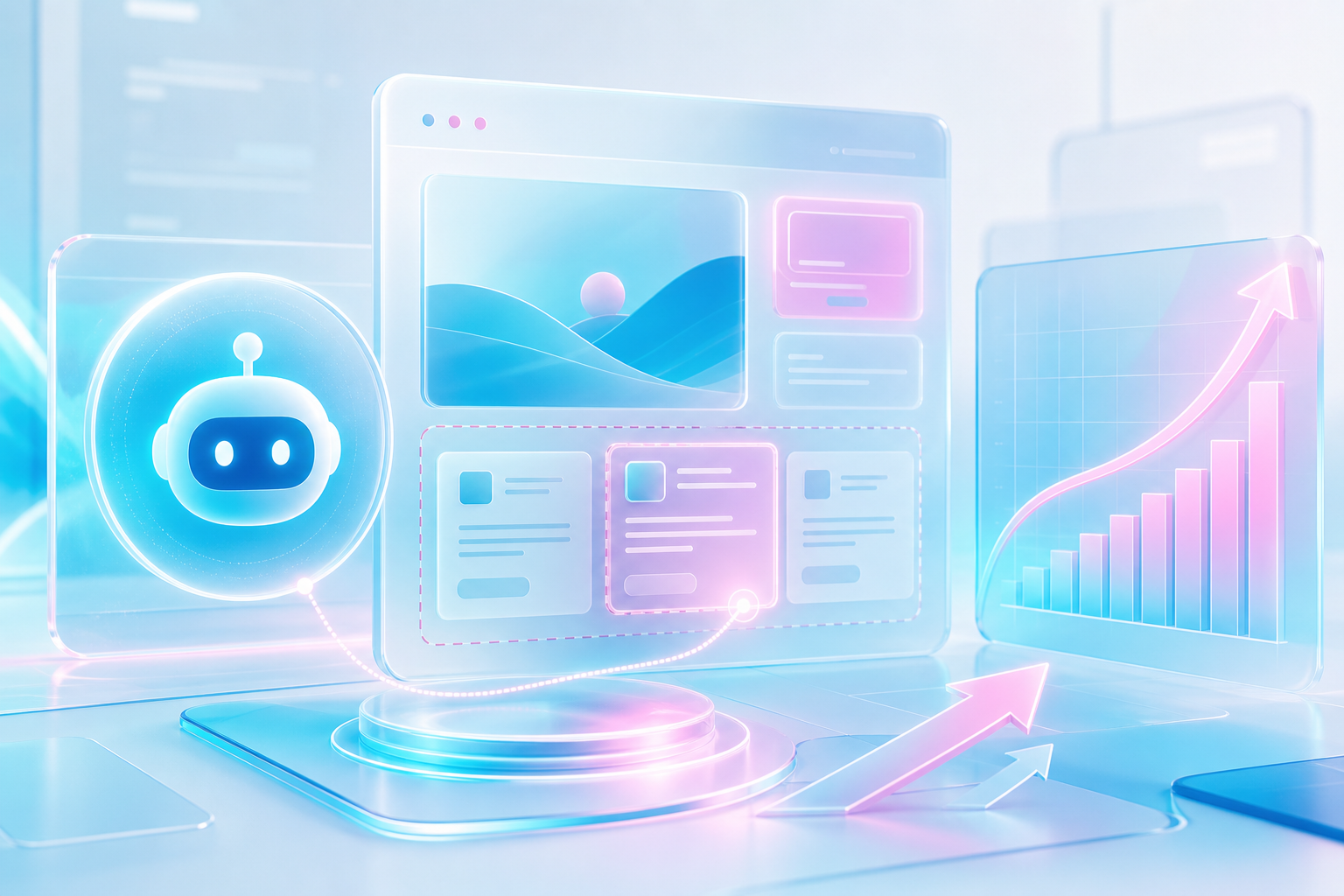
The real 2026 revolution is the dynamic start page. With models like Gemini 3 Pro and Claude 4.5 connected to your CRM, CDP and ad data, you can now adapt the hero, copy and even visuals in real time based on the visitor. A user arriving from a TikTok ad for a cosmetic product sees an adapted vertical short-video hero; a visitor coming from a B2B Google search sees a text-based ROI argument.
Emerging tools can even generate full variants on the fly in under 200 milliseconds. That's exactly the logic powering our AI generation platform: producing dozens of versions of the same message to test, learn and roll out the winning variant automatically. To dig deeper, check our guide on high-converting landing pages with generative AI for the full playbook.
Another under-leveraged lever: visual consistency between your ads and your start page. If the ad shows pastel pink visuals and the page greets users with dark gray, bounce rate skyrockets. Industrializing this requires a well-structured AI brand kit that automatically aligns every generated variant.
Common start page mistakes to avoid
Even in 2026, the same mistakes show up in every audit we run. First: a vague corporate tagline (« let's reinvent tomorrow together ») that says nothing about the product. Second: a generic CTA (« learn more ») instead of an action-driven CTA (« start my free audit »). Third: heavy animations that degrade LCP and tank SEO.
Add AI-specific traps: shipping AI-generated heroes without human review, copy-pasting ChatGPT text without context, or omitting alt tags on generated images. An optimized start page must stay accessible to everyone, including screen-reader users and search engines indexing your visuals.
Finally, don't underestimate mobile. Statista – Digital Advertising confirms that over 78% of paid ad traffic now flows through smartphones. Mobile-first start page design is no longer optional — it's the mandatory starting point.
FAQ: your questions about the start page
What's the difference between a start page and a landing page? +
How do you measure start page performance? +
Do you need a different start page for every ad campaign? +
Which AI tools should you use to optimize a start page? +
Conclusion: turn your start page into a strategic asset
The start page is now far more than an entry point: it's the interface where the value of all your SEO, Meta, Google and TikTok campaigns converges. In 2026, generative AI finally lets you personalize it at scale, optimize it for conversational engines and iterate continuously. Brands taking this turn will earn a lasting competitive edge; the others will watch their CAC climb without knowing why.
To go further, explore our complete 2026 Google Ads guide and take action: audit your current start page, identify the top 3 friction points, and generate your first AI variants this week with Market IA.
Écrit par
Équipe Market IA
L'équipe Market IA vous accompagne dans la création de publicités performantes grâce à l'intelligence artificielle.
Prêt à créer des publicités qui convertissent ?
Rejoignez +2000 e-commerçants qui utilisent Market IA pour créer leurs visuels publicitaires.